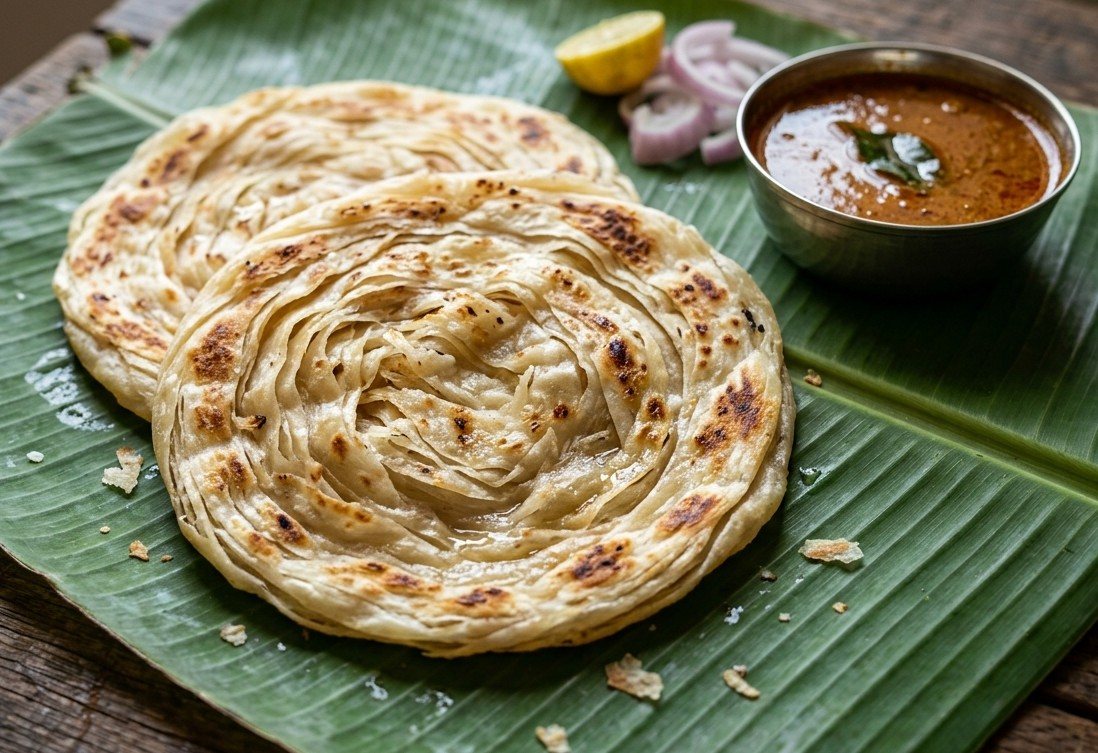
Flaky Parotta Recipe: How to Make Parotta at Home, Step by Step
About This Recipe
Soft, flaky parotta like the Tamil Nadu street stalls: the dough, the fan-fold, the coil and the crush that open up the layers. With timings, fixes for hard parotta, and what to serve with it.
Ingredients
- 2 cups (250g) maida (all-purpose flour)
- 1 tbsp sugar
- 3/4 tsp salt
- 1/4 tsp baking soda (optional, for extra softness)
- 1/4 cup milk, at room temperature
- 2 tbsp oil, for the dough
- 1/2 cup water, plus 1-2 tbsp more if needed
- 1/4 cup oil or melted ghee, for resting and layering
- Extra oil for the work surface and the tawa
Instructions
- 1
Mix the maida, sugar, salt and baking soda (if using) in a wide bowl.
- 2
Add the milk and 2 tbsp oil and rub them into the flour with your fingertips.
- 3
Add the water a little at a time and bring it together into a soft, slightly sticky dough. It should be softer than chapati dough.
- 4
Knead hard for 10 minutes, slapping and stretching the dough on the counter, until it is very smooth and springs back when pressed.
- 5
Coat the dough with oil, cover it, and rest it for at least 2 hours (up to 4 hours, or overnight in the fridge). This rest is what lets you stretch it thin later.
- 6
Divide into 8 balls. Roll each ball in oil, place in an oiled plate, cover, and rest another 30 minutes.
- 7
Oil the counter well. Flatten one ball and roll or stretch it as thin as you can, until you can almost see the counter through it. Small tears are fine.
- 8
Spread 1 tsp oil or ghee over the whole sheet and dust lightly with flour.
- 9
Gather the sheet into pleats like a folding fan, starting from one edge, to get a long pleated rope.
- 10
Stretch the rope gently, then coil it into a tight spiral and tuck the end underneath. Repeat with the rest and let the coils rest for 15 minutes.
- 11
Press each coil flat with your palm and roll it gently into a 6-inch round, about 1/4 inch thick. Don't press hard, or the layers fuse.
- 12
Heat a tawa on medium heat. Cook the parotta until light brown spots appear underneath, about 1.5-2 minutes, then flip.
- 13
Drizzle 1 tsp oil around it and cook both sides until golden and crisp at the edges, pressing gently with a spatula. Total 4-5 minutes.
- 14
While hot, stack 2-3 parottas and clap them hard from the sides between your palms (or crush with a cloth) so the layers open up.
- 15
Serve immediately with salna, vegetable kurma or chicken curry.
Cooking Tips
- Soft dough = soft parotta. If the dough feels like chapati dough, add more water. It should be slightly sticky.
- Don't skip the rests. Unrested dough tears and shrinks back when you stretch it.
- Use oil, not flour, on the counter when stretching. Flour makes the dough stiff.
- Thinner sheet = more layers. Street cooks stretch it almost transparent.
- Cook on medium, not high heat. High heat browns the outside before the inner layers cook.
- Always crush the parotta while it is hot. Once cool, the layers set and won't open.
Nutrition Information
Per serving. Values are approximate.
Flaky parotta is Tamil Nadu’s favourite street-food bread: soft inside, crisp at the edges, and full of thin layers that peel apart. You find it at every parotta kadai from Madurai to Chennai, served hot off a huge tawa with a ladle of salna. It takes time and a little practice, but you only need flour, oil and patience.
How to Get Flaky Parotta Layers
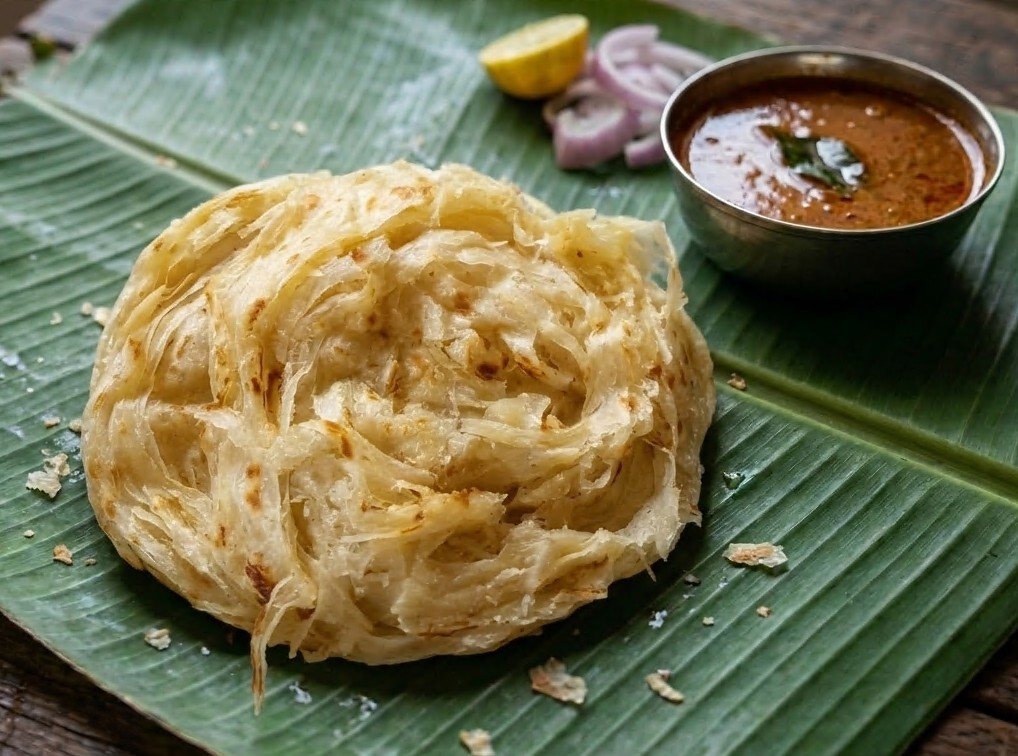
The layers come from three things working together:
- A soft, well-rested dough that stretches paper-thin without tearing.
- Oil between the layers, from oiling the thin sheet before pleating, so the layers cook separately instead of fusing.
- The fan-fold and coil, which turns one thin sheet into dozens of stacked layers in a spiral.
The final crush, clapping the hot parottas between your palms, breaks the layers apart so they turn fluffy and flaky.
Parotta Making, Step by Step at a Glance
| Stage | What you do | Time |
|---|---|---|
| Dough | Mix and knead hard into a soft, slightly sticky dough | 15 min |
| First rest | Oiled and covered | 2-4 hours |
| Balls | Divide into 8, oil, rest again | 30 min |
| Stretch and fold | Stretch thin, oil, fan-fold, coil | 3-4 min each |
| Coil rest | Let the spirals relax | 15 min |
| Cook | Medium heat, 2-3 min a side, with oil | 4-5 min each |
| Crush | Clap while hot to open the layers | 10 sec |
Why Is My Parotta Hard? (Troubleshooting)
- Hard or chewy: the dough was too stiff, or you didn’t rest it long enough. Add more water next time and rest at least 2 hours.
- No layers: the sheet was too thick, there was too little oil before folding, or you pressed too hard while rolling the coil.
- Dough keeps tearing: it needs more kneading or a longer rest. A few holes are fine and even help the layers.
- Dough shrinks back: the gluten is still tight. Cover it and wait 10 more minutes.
- Burnt outside, raw inside: the tawa is too hot. Turn it down to medium.
- Dry the next day: wrap leftover parottas in a cloth or foil. Reheat on a tawa with a few drops of water and a cover, or turn them into kothu parotta.
What to Serve With Parotta
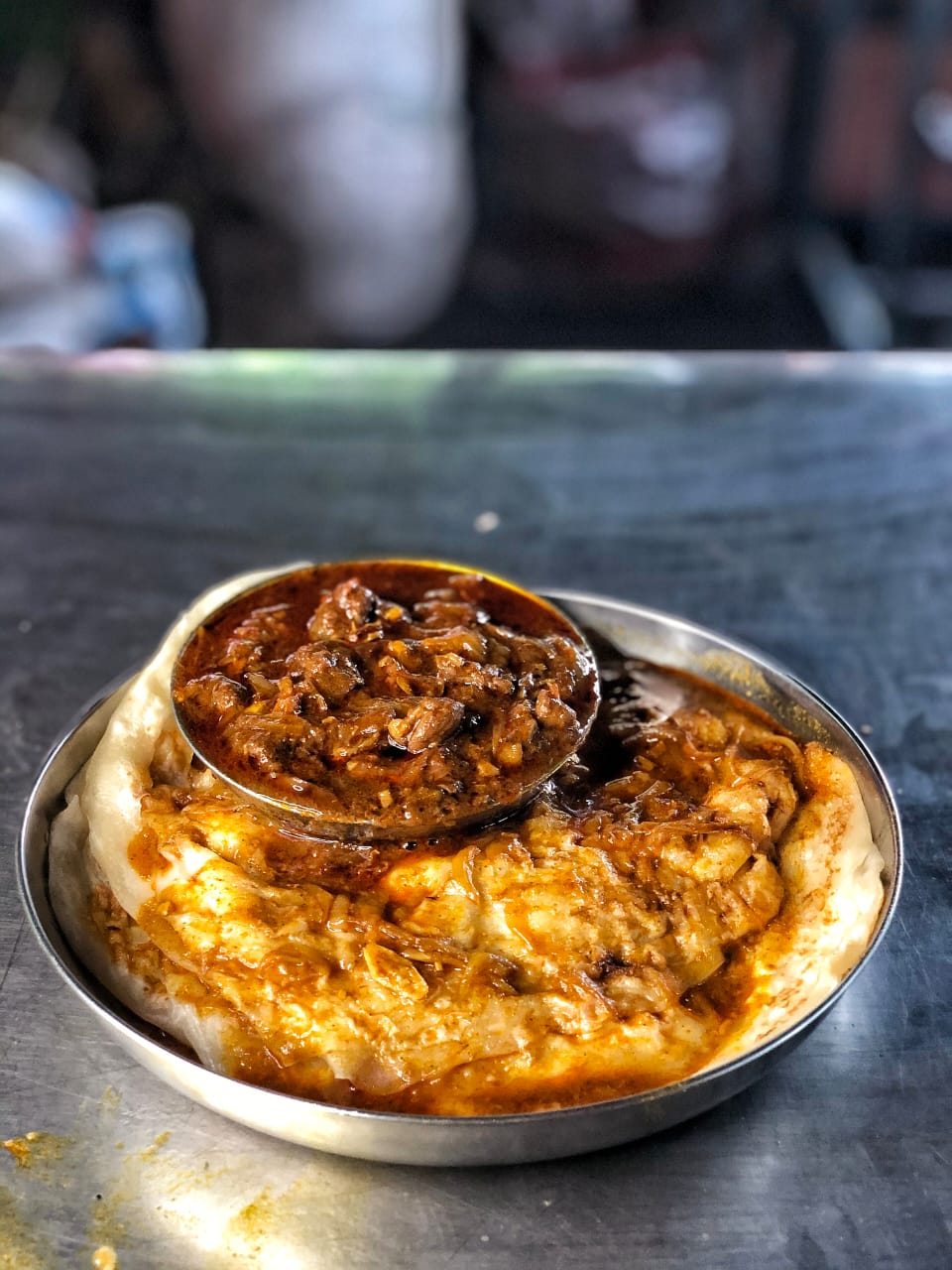
- Salna: the thin, spicy gravy every parotta stall serves, in veg or chicken versions.
- Vegetable kurma: a mild coconut-based curry, ideal for kids.
- Chettinad chicken curry: bold and peppery, a classic non-veg pairing.
- Vadai curry: a Chennai favourite, usually with idli and dosa, but great with parotta too.
- Egg curry or omelette: the quick late-night combination.
Popular Parotta Varieties in Tamil Nadu
- Madurai bun parotta: thick, fluffy and almost bun-like. Madurai’s signature.
- Virudhunagar / Thoothukudi poricha parotta: deep-fried in oil until crisp, served drenched in salna.
- Kothu parotta: shredded parotta stir-fried on the tawa with egg or meat, onions and salna, with the famous clanging of iron spatulas.
- Coin parotta: tiny, bite-sized parottas, a wedding and party favourite.
- Ceylon parotta: the Sri Lankan Tamil style, often stuffed with egg and meat.
- Wheat parotta: made with whole-wheat flour (atta) for a healthier version. It is less flaky, so use a softer dough and a longer rest.
Parotta vs Paratha vs Kerala Porotta
Parotta (Tamil Nadu) and Kerala/Malabar porotta are the same family: a maida dough stretched thin, folded, coiled and crushed. North Indian paratha is different. It is usually made with whole-wheat flour and folded or stuffed, not stretched and coiled, so it has fewer, thicker layers.
Frequently Asked Questions
Can I make the dough the night before? Yes. Coat it with oil, cover it well and refrigerate it. Bring it to room temperature for an hour before stretching. The long rest makes it even easier to stretch.
Can I make parotta without egg? Yes. This recipe has no egg. Some street shops add an egg to the dough for richness, but milk and oil give a soft result without it.
Do I need baking soda? No. It is optional and makes the parotta slightly softer and puffier. Good kneading and resting matter much more.
How many parottas does this make? About 8 medium parottas, enough for 3-4 people.
How do I store and reheat parotta? Keep them wrapped in a cloth or foil for up to a day at room temperature, or 3 days in the fridge. Reheat on a covered tawa with a sprinkle of water, then crush again.
Recipe Info
- Cuisine Tamil Nadu
- Course Main Course
- Diet Vegetarian
- Prep Time 3 hours (incl. resting)
- Cook Time 30 minutes
- Total Time 3 hours 30 minutes