Recent Nobel Prize-winning research has renewed attention on how institutions and social norms shape economic development. In India, caste and gender-based discrimination continues to influence economic outcomes; Tamil Nadu, though less affected than many regions, is cited as showing how social inclusion and growth can reinforce each other.
Tamil Nadu has posted strong economic and social outcomes. With about 6% of India’s population, it contributed 9.21% to national GDP in 2023-24. RBI data show the State had the second-highest per capita NSDP (constant prices) among major States in 2024-25, while its real growth rate of 11.19% for 2024-25 was the highest among States and the best for Tamil Nadu in a decade.
On social development, the State ranks near the top on multiple measures: it has the second-lowest poverty headcount and the second-lowest multidimensional poverty index, ranks third in the SDG Index, and leads in tertiary education enrolment while placing second in higher secondary enrolment. It was also ranked best in the Social Progress Index, reflecting sustained investments not only in power and transport but also in health and education.
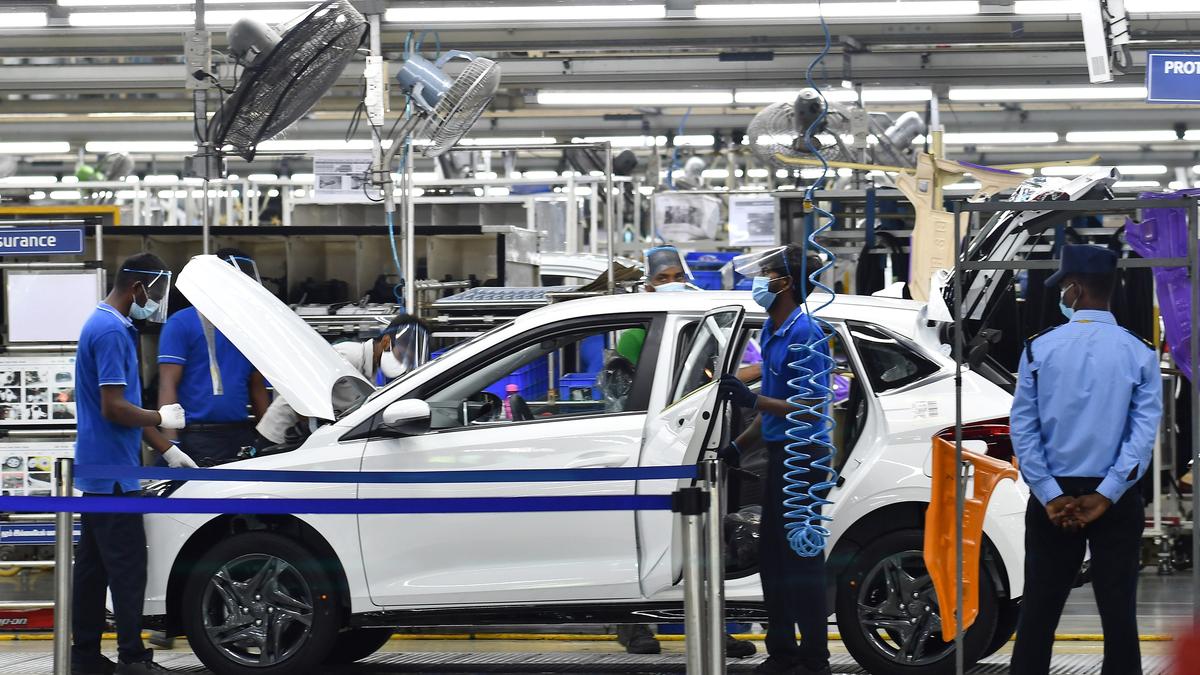
A key feature of the State’s economic transformation is the balanced expansion of manufacturing and services, with manufacturing standing out. Tamil Nadu has long been a major producer and exporter of automobiles and auto components, garments and textiles, and leather goods, and has recently strengthened its position in electronics—accounting for over 41% of India’s electronics exports in 2024-25. With seven of Apple’s 14 assembly and component firms in India located in the State, Tamil Nadu has also announced a separate policy for electronic component production to deepen local linkages.
Another recent shift is the rise of Tamil Nadu as a hub for non-leather footwear, with contract manufacturers producing for global brands such as Nike, Crocs, Adidas and Puma. The article notes that the State’s growth is more spatially distributed than in many fast-growing States, with sectoral clusters across centres including Coimbatore, Tiruppur, Tiruchirappalli, Sivakasi and Virudhunagar—helping bridge the urban-rural divide—while also flagging that sustaining this inclusive trajectory will require confronting emerging challenges.