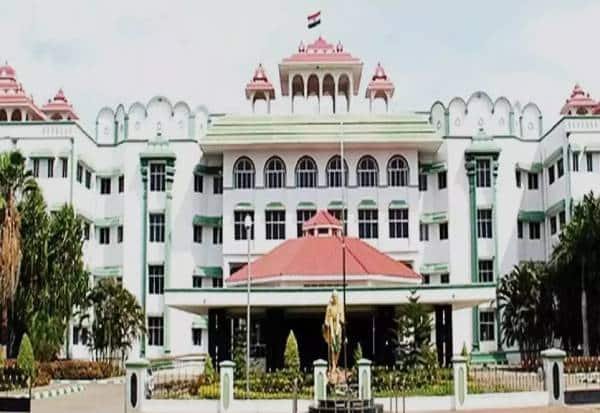
The Madurai Bench of the Madras High Court has issued guidelines directing civil courts handling temple land-related disputes to give such matters priority and, as far as possible, dispose of them within six months.
The directions were issued while hearing a petition filed by Chennai resident Radhakrishnan seeking removal of encroachments from lands belonging to the Vennamalai Balasubramaniaswamy Temple in Karur district. A Division Bench comprising Justices B. Velmurugan and B. Pugalendhi noted concerns that organised protests and the influence of certain encroachers could hinder enforcement of court orders.
As part of the guidelines, the Hindu Religious and Charitable Endowments (HR&CE) Department has been asked to file a status report before the court once every three months, detailing recovered lands, actions initiated, civil suits filed, the stage of cases and steps taken to evict encroachers. The court also directed the Karur Superintendent of Police to ensure adequate security for officials involved in eviction operations.
The bench further ordered the Registrar of Societies to inquire into the activities of organisations that protested against the recovery of temple lands and to take action if any illegal activities are found. It reiterated that compliance with court orders is not optional and expected the State’s administrative machinery to act firmly and in fidelity to the Constitution.
In a related direction in a temple land lease matter, the court asked the HR&CE Department to publish details of temple-owned lands on its website—such as extent, lease period, lessees and lease amounts—so the information is easily accessible and enables participation in public auctions, potentially improving revenue. It also stressed strict adherence to rules, including ensuring no lease continues beyond five years without the Commissioner’s approval and that leases of immovable properties of religious institutions are granted only through public auction.