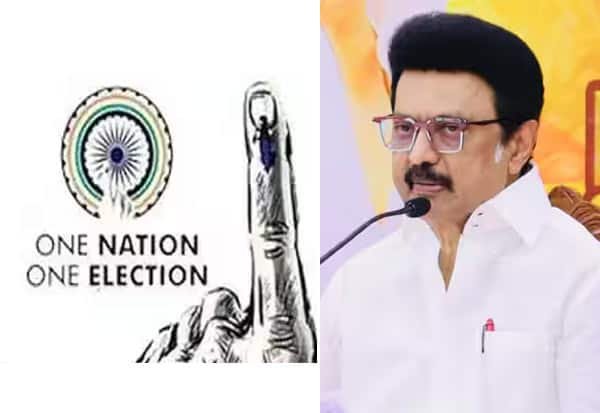
Tamil Nadu Chief Minister M K Stalin has criticised the proposed “One Nation, One Election” model, calling it “worse than the disease”. In an article written for an English daily, he argued that synchronising elections would reduce the value of the vote and could increase voter apathy.
Stalin said the proposal could lead to mid-term polls producing governments with shorter mandates, turning elections into frequent interim exercises. He warned that such reduced mandates may weaken administration and accountability, as governments may lose the incentive to pursue long-term structural reforms and instead drift toward populist politics and policy distractions.
He also flagged the risk of an “administrative vacuum”, noting that the draft does not specify a minimum remaining term required to trigger a mid-term election. At the state level, he said postponing elections could extend President’s Rule, which he argued would conflict with Article 356(5), under which President’s Rule is permitted for one year, extendable up to three years only under a national emergency and with Election Commission certification.
On costs, Stalin said the financial burden of elections is small at the scale of the overall economy, and does not justify a major constitutional change that could weaken federalism. He argued that elections should not be treated as an avoidable administrative expense, but as a necessary democratic cost to keep power accountable.
Stalin said the promised benefits of the proposal are overstated while the structural damage could be deep, potentially altering the Constitution’s character and violating the basic structure principle. He cited Indonesia’s 2019 attempt to simplify administration and reduce costs, which reportedly led to around 900 election workers’ deaths and more than 5,000 falling seriously ill, and said India should not repeat that mistake.