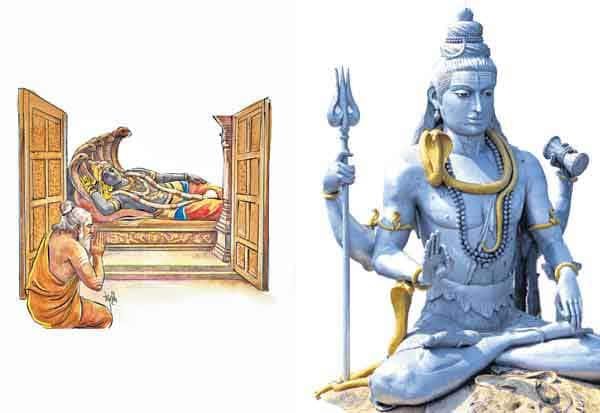
Narada tells Parvati he is amazed that Shaivism and Vaishnavism appear to unite in stories centered on Siddhars, and asks about the episode in which Ranganathar’s ornaments came into Sattaimuni’s hands.
Parvati says Bharat is a sacred land where both traditions have flourished, and that Siddhars played a notable role in nurturing them. She begins narrating how Sattaimuni, drawn to spirituality, travelled from Kailash to Srirangam to worship Ranganathar.
By the time he reached the temple, the daily rituals were over and the night closure had been done. Standing outside in distress, he raised his hands and prayed aloud. The tale says the temple doors opened on their own, lamps shone brightly, and the sounds of instruments and bells filled the air as Ranganathar appeared at the entrance adorned with garlands and ornaments. Overwhelmed, Sattaimuni fainted at the deity’s feet.
Hearing the commotion, locals gathered and saw Sattaimuni unconscious with the deity’s ornaments in his hands. Believing he had entered as a thief, they beat and tied him to a pillar. The king arrived, doubted Sattaimuni’s explanation, and demanded proof. With the crowd watching, Sattaimuni prayed again; the doors opened once more, and the ornaments are said to have come into his hands again.
Shaken, the king and people sought forgiveness. The story concludes that Sattaimuni merged in a form of light with Ranganathar before everyone, and that he is believed to bless devotees at Srirangam even today—seen as a symbol of Shaiva-Vaishnava harmony.