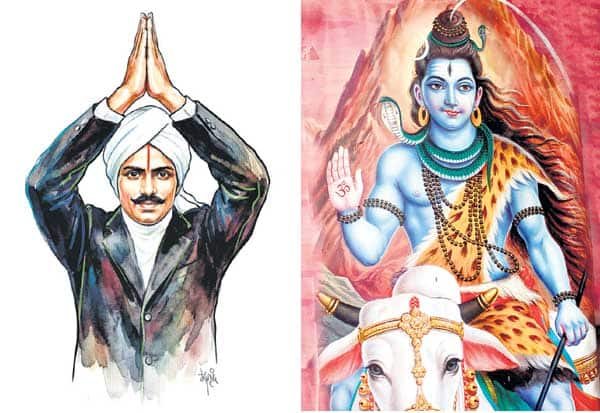
Mantras hold a special place in Indian tradition, and the article says their benefits are believed to come when they are learnt, pronounced correctly and used in worship. It defines “mantra” as something that steadies the mind and creates positive vibrations, with sound helping remove obstacles and lead a person towards a better path.
Explaining the term’s origin, the piece notes the Sanskrit derivation that describes a mantra as that which protects the one who contemplates it. It links this idea to Mahakavi Subramania Bharathiyar’s writings, where he speaks of mantra-like power in national expressions and the uplifting energy associated with symbols such as the motherland’s flag.
The article also cites Saiva tradition, recalling how Thirugnanasambandar’s hymns on sacred ash are said to have helped restore health to a Pandya king. It references Thirumoolar’s Thirumandiram as a core guide to Saiva Siddhanta life, and points to Tolkappiyam in describing mantra as a “hidden” or “coded” utterance whose meaning may not be immediately apparent.
Beyond spirituality, the essay connects words to sound waves and suggests they can have both constructive and protective power. It says mantras help cleanse inner impurities such as desire, anger and delusion, and highlights the five-syllable chant “Namashivaya” as an example of a name believed to remove harm.
Listing widely recited hymns and stotras—such as Sri Rudram, Lalitha Sahasranamam, Aditya Hridayam, Vishnu Sahasranamam, and devotional works by Nayanmars, Azhwars and later saints—the article says these are regarded as sources of mental joy and physical well-being. It also notes that mantras appear in classical literature like Silappathikaram, where “mantra” is mentioned among tools used even for wrongdoing, underscoring that knowledge can be applied in different ways.