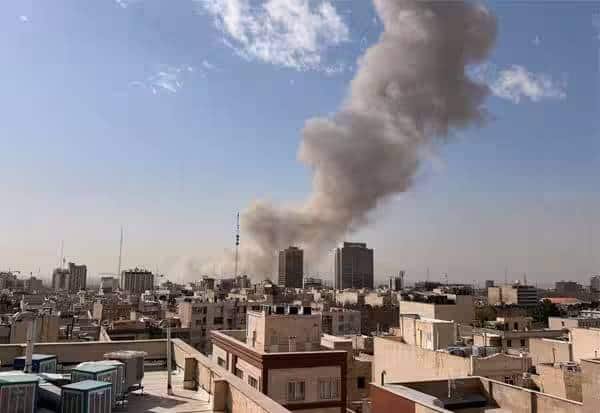
Tehran’s retaliatory strikes on key oil and gas facilities across the Gulf have jolted global energy markets, with Brent crude rising 6% to about $114 a barrel, according to the report.
The escalation follows a conflict that began on February 28, when the US and Israel launched attacks on Iran citing nuclear concerns. The war has continued for three weeks, with Iran targeting US military bases and energy infrastructure in Israel and the wider West Asia region.
The report says Israel earlier hit Iran’s South Pars gas complex, described as one of the world’s largest LNG-producing sites. Iran then intensified its response, and a missile strike on Qatar’s Ras Laffan gas facility triggered a major fire and halted production.
Qatar’s Energy Minister Saad Al Kaabi was quoted as saying the attack destroyed 17% of the country’s LNG export capacity, potentially affecting supplies to Asian and European markets. Similar strikes were also reported on Saudi Arabia’s Samref oil facility, Kuwait’s Mina Al Ahmadi refinery, and the UAE’s Habshan gas facility.
With Asian natural gas prices said to have doubled, concerns are rising for import-dependent countries. Trade data cited in the report notes India imported 27 million tonnes of gas in 2024, with 47%—around 12 million tonnes—sourced from Qatar; experts warned supply could tighten if the shutdown lasts for weeks, impacting industries, vehicles and households that rely on natural gas and CNG.