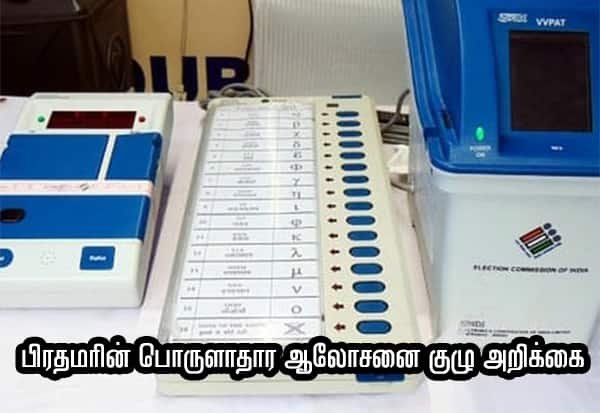
A study report released by the Prime Minister’s Economic Advisory Council (EAC) has said that implementing the “One Nation, One Election” plan—holding Lok Sabha and State Assembly elections together nationwide—could reduce the requirement for election personnel by about 26 lakh over a five-year election cycle.
The report notes that India conducted simultaneous Lok Sabha and Assembly elections in 1951-52, 1957, 1962 and 1967. The practice later stopped as State Assemblies were dissolved more frequently.
The idea was proposed by the Law Commission in 2018, and a committee headed by former President Ram Nath Kovind submitted a report in 2024. In December 2024, a constitutional amendment bill related to the proposal was passed in the Lok Sabha and sent to a Joint Parliamentary Committee, where its provisions are being examined.
According to the EAC’s calculations—based on 10.51 lakh polling stations recorded in 2024 and excluding security personnel such as paramilitary forces and police—separate Assembly and Lok Sabha elections would require nine staff per polling station, while simultaneous polls would need six. This implies an initial reduction of about 33%.
The report adds that election duties are largely carried out by State government employees, with school teachers forming a significant share. It estimates that simultaneous elections could save 1.04 crore workdays, equivalent to four workdays each for 26 lakh election personnel.