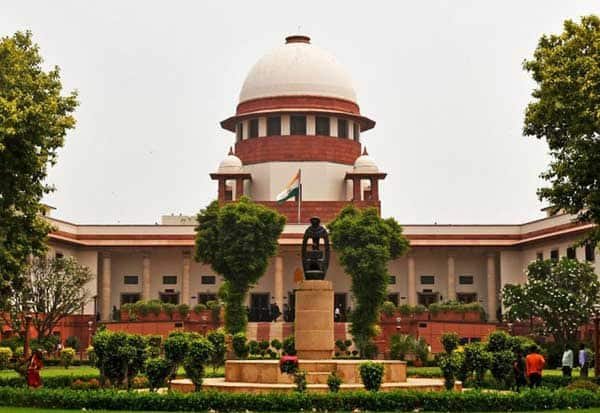
The Supreme Court has reiterated that people who convert to religions other than Hinduism, Sikhism or Buddhism cannot claim Scheduled Caste (SC) status. It said the SC status enjoyed earlier is lost immediately upon such conversion, citing the 1950 Constitutional Order on Scheduled Castes.
The observation came in an appeal linked to a case from Andhra Pradesh. The complainant, Chintada Anand, who had converted to Christianity and became a pastor, sought action under the SC/ST (Prevention of Atrocities) Act against a person named Ramireddy for alleged caste-based harassment. After the Andhra Pradesh High Court dismissed the case, the matter reached the Supreme Court.
A bench of Justices B.K. Misra and Manmohan, while detailing its reasoning in the full order released, said a person who returns to Hinduism, Sikhism or Buddhism after conversion must submit three kinds of evidence to regain SC status.
First, the person must clearly prove that they were originally born into a caste notified under the 1950 Scheduled Castes order. Second, there must be reliable proof that the person has fully renounced the converted religion and genuinely returned to the mother faith, including following the rituals, customs and worship practices of the earlier caste. Third, the person must show that the relevant community has accepted them; a self-declaration of reconversion alone is not sufficient.
The court added that if any one of these proofs is not produced, the person cannot claim SC status again. It also noted that in Scheduled Tribe (ST) matters, conversion is not treated as an immediate bar, but the person must still prove they continue to follow tribal traditions and are accepted by the tribal community.