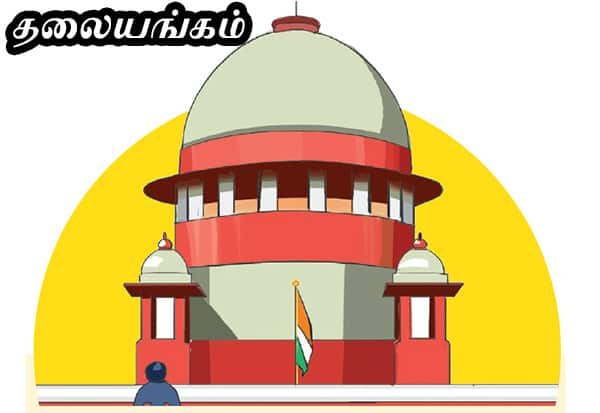
The Supreme Court has ruled that people who convert from Hinduism to religions other than Sikhism or Buddhism cannot claim Scheduled Caste (SC) status, and that the status is lost immediately upon such conversion.
The case stemmed from a complaint by Chinthada Anand of Andhra Pradesh, who converted to Christianity and works as a pastor. He sought action against a person named Ramireddy under the SC/ST (Prevention of Atrocities) Act, alleging caste-based harassment.
The Andhra Pradesh High Court had held that after converting to Christianity, Anand could no longer be treated as an SC and therefore could not seek protection under the SC/ST Act. Challenging this, he appealed to the Supreme Court, where a two-judge bench affirmed the High Court view, citing the 1950 Constitutional Order on Scheduled Castes.
The ruling has renewed debate, with one side arguing that caste discrimination can persist even after conversion, including among Dalits who move to Christianity or Islam. Others contend that reservations for SC communities were designed as a constitutional measure for historically marginalised groups, and that the judgment strengthens social justice and the rule of law.
The article also points to unresolved legal and policy questions, including concerns about whether similar principles could affect other backward classes after conversion. It notes that the 2007 Ranganath Misra Commission recommended extending SC reservation benefits to Dalits who converted to Christianity or Islam, a proposal the Union government rejected, while a later commission headed by former Chief Justice K.G. Balakrishnan is yet to submit its report.