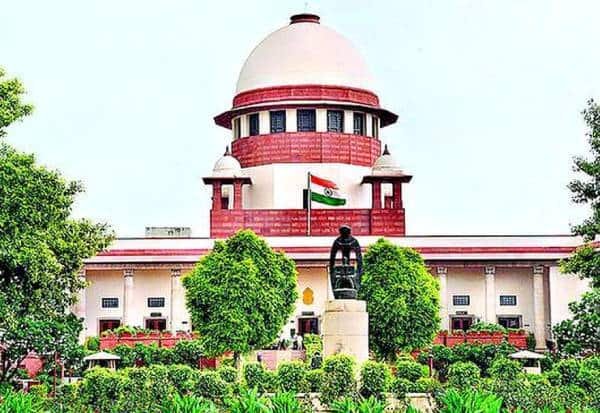
The Supreme Court has been hearing the long-running dispute over the entry of women of all ages into Kerala’s Sabarimala Ayyappa temple. A five-judge Constitution Bench in 2018 allowed women of all age groups to enter the shrine.
Subsequently, a review petition was taken up by another bench, which referred the matter to a nine-judge Constitution Bench, noting that questions of gender equality arise across religions. The hearing on the Sabarimala issue has been continuing over the past two days.
Appearing for the Union government, Solicitor General Tushar Mehta argued that courts are not equipped to decide religious practices or to determine what constitutes superstition. He said that under Article 25(2), it is for legislatures to bring reform laws to curb superstitious practices, and that only legislatures can define what is superstition in a diverse society.
During the hearing, judges indicated that the Supreme Court has the authority to decide what amounts to superstition in religious practices. Mehta disputed this, citing examples and warning that ignoring long-held social beliefs could affect religious freedom, leading to a sharp exchange between the bench and the government’s counsel.
The hearing is set to continue on Thursday.