
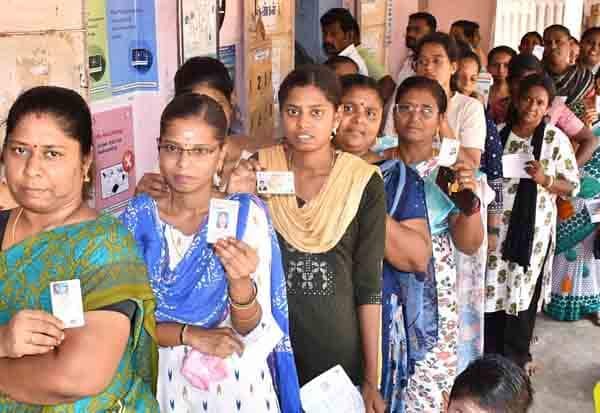
Chennai witnessed an unusually high voter turnout in the Tamil Nadu Assembly election held on April 23 across all 234 constituencies. The state recorded 85.03% polling, crossing 80% for the first time and sparking debate over what drove the surge.
Political parties offered competing explanations: DMK supporters linked the turnout to public approval of the government, AIADMK cadres claimed it reflected anti-incumbency and a desire for change, while TVK supporters attributed it to a “Vijay wave” encouraging more voters to participate.
However, the article points to the role of SIR-related voter roll corrections as a key factor. After removing entries such as deceased voters, fake addresses, duplicate registrations, and those who had moved away, the eligible voter base stood at 5.73 crore, including 14,59,039 first-time voters who turned 18.
Based on this revised electorate, about 4.85 crore people voted in 2026—around 22 lakh more than in 2021, when 4.63 crore votes were cast from a total electorate of 6.29 crore (73.63% turnout). The data also notes that while the number of votes cast has risen in every election since 2001, the increase in 2026 is smaller than the typical 30–40 lakh rise seen in several previous cycles.
Taken together, the figures suggest the turnout percentage may have climbed largely because the total voter count reduced after SIR corrections, even as the absolute increase in votes cast appears relatively modest compared to earlier elections.