
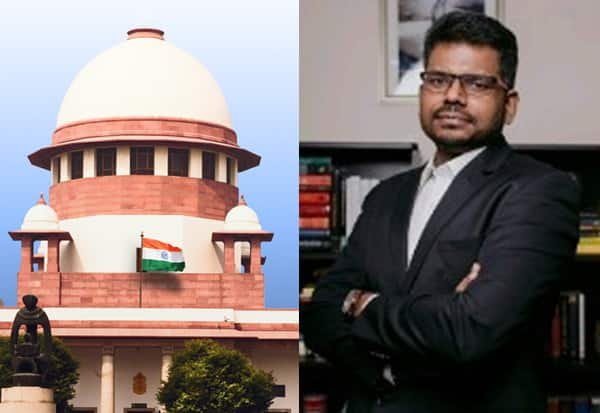
Thiruvananthapuram: A nine-judge Constitution Bench of the Supreme Court heard review and writ petitions arising from the 2018 Sabarimala judgment that allowed women of all ages to enter the Ayyappa temple. During the hearing, the bench observed that courts cannot interfere in traditional temple worship practices and that deciding how to worship is a devotee’s sacred right.
Senior advocate J Sai Deepak, appearing for the Pandalam royal family and several devotee organisations, argued for nearly three hours to press the point that long-standing religious practices lie outside the court’s jurisdiction. He contended that a practice does not suddenly become open to judicial scrutiny merely because the State recognises it or codifies it into law.
Sai Deepak also cautioned that what cannot be done directly should not be done indirectly, and that courts should not use law as a “backdoor” to test the rationality of ancient religious traditions. Chief Justice Surya Kant, however, noted that once State action or administration is questioned, judicial review comes into play, and asked who would examine a ban imposed by the government in the name of social welfare.
The bench—comprising Chief Justice Surya Kant and Justices B V Nagarathna, M M Sundresh, Ahsanuddin Amanullah, Aravind Kumar, A G Masih, Prasanna B Varale, R Mahadevan and Joymalya Bagchi—began the hearing on April 7, 2026. The matters also include issues linked to women’s entry into mosques and dargahs, the religious rights of Parsi women who marry outside the community, and the legality of female genital mutilation (FGM) in the Dawoodi Bohra community; Solicitor General Tushar Mehta also addressed the bench on the broader approach to religious practices.