
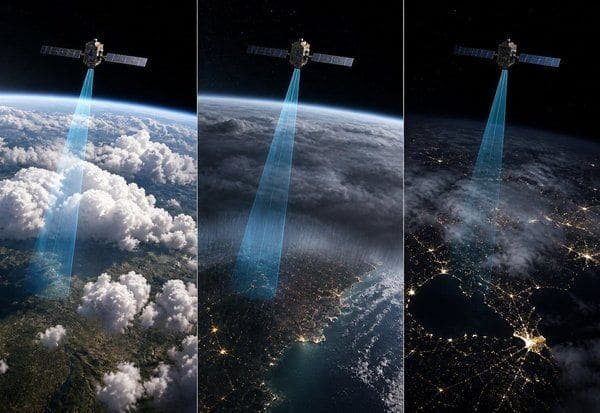
New Delhi: GalaxEye, a space-tech startup supported by IIT Madras through technical and financial backing, has launched an Earth observation satellite featuring a new “OptoSAR” imaging approach. The satellite was sent to orbit aboard SpaceX’s Falcon 9 rocket from California.
India’s space sector, long dominated by ISRO, has been opening up to private participation in recent years following policy changes by the Union government. Bodies such as IN-SPACe, set up in 2020, facilitate approvals, guidance and access to infrastructure, while NewSpace India supports activities including satellite launches.
Founded in 2021 by a group of IIT Madras students, GalaxEye is developing capabilities to monitor Earth from space and convert the resulting data into usable insights using modern tools such as artificial intelligence. The company’s Earth observation mission is named “Drishti”.
What sets Drishti apart is its combination of two imaging methods in a single platform—optical camera-based imaging and radar-based imaging—branded as “OptoSAR”. Optical imagery can provide clear, human-eye-like views but is hindered by cloud cover, while radar can image through clouds, rain, darkness and at night, though typically with less visual clarity.
Retired space experts noted that frequent cloud cover in tropical regions like India limits conventional optical satellites, affecting applications such as disaster management, agriculture and security. By pairing electro-optical sensors for clear-weather colour imagery with SAR radar for all-weather, day-night imaging, Drishti is designed to improve the availability of accurate ground information.