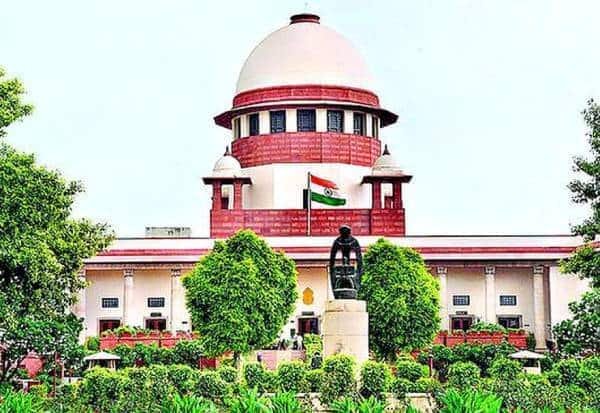
The Supreme Court has cautioned that if courts begin questioning religious practices and rituals one by one, the country’s religious framework and the foundations of its civilisation could be weakened.
A nine-judge Constitution Bench is hearing a set of petitions on alleged discrimination against women at places of worship, including Sabarimala in Kerala, and on the limits of religious freedom across faiths. The batch also includes challenges related to the Dawoodi Bohra and Parsi communities, including petitions against the practice of excluding women who enter inter-faith marriages.
During arguments on the Dawoodi Bohra-related issues, Justices B.V. Nagarathna and M.M. Sundresh observed that religion is deeply interwoven with society and affects everyone. They warned that if every ritual is brought to court, even minor matters such as opening or closing temples could trigger hundreds of petitions, and attempts to resolve differences between individuals and institutions could fracture religions.
Appearing for reformists, advocate Raju Ramachandran argued that religious freedom under Articles 25 and 26 cannot operate in a manner that harms individuals’ fundamental rights, and that practices contrary to the Constitution should not be allowed to continue. Justice Joymalya Bagchi, however, said “constitutional morality” may not be the correct yardstick to test the validity of a religious practice, and that reading it into the morality clause under Article 26 may not be the right interpretive approach.
The matter is scheduled to be heard again next week.