
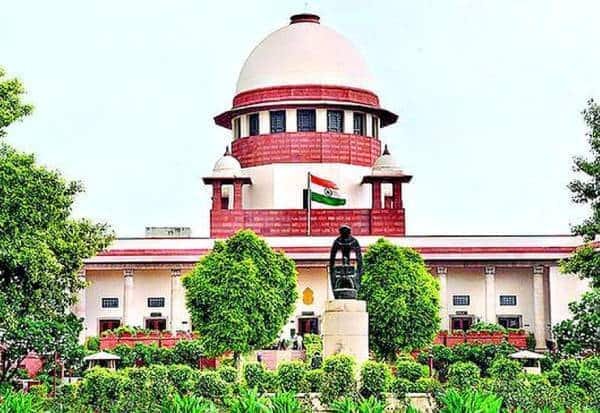
The Supreme Court, hearing the Sabarimala review-related matters, asked what would become of religion in India if religious practices are routinely brought before constitutional courts for scrutiny. The nine-judge Constitution Bench is examining broader questions on the limits of religious freedom, with the proceedings entering the 14th day.
The case stems from the 2018 verdict that allowed women of all ages to enter the Sabarimala Ayyappa temple in Kerala’s Pathanamthitta district. Review petitions were later filed, leading to the present Constitution Bench hearing.
During arguments, senior advocate Shadan Farasat, appearing for the women’s side, referred to a 2025 survey claiming that more than half of Indians support inter-faith marriages. Chief Justice Suryakant cautioned that such surveys can be complex and may be framed with specific intent, urging lawyers to be careful while placing them before courts.
Justice B.V. Nagarathna noted that the Constitution already recognises an individual’s right to marry a person of their choice, questioning the need for a separate survey to establish that point. Farasat then cited Article 51A, arguing that citizens should renounce practices that undermine women’s dignity.
Senior advocate Menaka Guruswamy submitted that courts often have to navigate conflicts between individual and group rights. The Chief Justice observed that courts may accept reform when society seeks it through elected representatives, but questioned how courts can intervene when something is perceived as being imposed. In another exchange, senior advocate Vijay Hansaria argued that welfare legislation should not be struck down merely for touching religious practices and linked the restriction to social attitudes around menstruation. Justice Nagarathna responded that whether something is seen as a restriction depends on how a devotee views it, and warned that questioning every religious practice could open the floodgates to hundreds of petitions.