
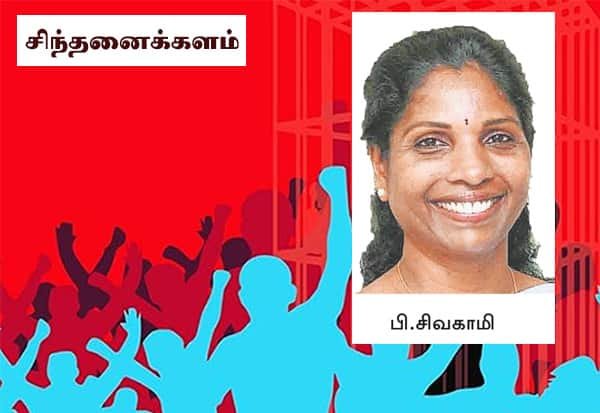
Dr B. Sivagami, a retired IAS officer, has revisited the origins and present-day functioning of the Special Component Plan, linking its core idea to Dr B.R. Ambedkar’s 1940s vision of “state socialism” and the belief that land ownership is central to genuine social liberation.
She notes that the Union government formally introduced the plan during the Sixth Five-Year Plan (1979–80) after earlier planning failed to deliver adequate benefits to Dalit communities. The key principle was that states should earmark funds in proportion to the Scheduled Caste population, through both direct schemes that deliver benefits to individuals and indirect schemes that secure their share in general programmes.
According to the article, while states such as Karnataka and Maharashtra prioritised direct interventions, Tamil Nadu from the outset distributed the funds across departments. As a result, structural constraints in sectors like education, agriculture and power—along with the reality that many Dalits were landless—meant that allocations to agriculture and irrigation could not be fully utilised by intended beneficiaries. She also points to the power sector, where large spending and the absence of sufficient productive, profit-making units limited the ability of Dalit households to benefit in proportion to their share.
The plan, she argues, remained largely indirect and under-publicised for years, until sustained campaigns by social activists and Dalit officials from 2001 led to changes in 2006, including renaming it as the Scheduled Caste Sub-Plan. The push culminated in 2024 with the Tamil Nadu Adi Dravidar and Tribal Welfare Development Plan Act, which legally secured earmarking and allowed unspent funds to be carried forward.
Even now, she writes, a significant portion of the current ₹21,350 crore allocation is routed to items such as electricity subsidy and ration-related spending, and compensation to the power utility is described as an accounting expense that does not become a direct asset for people. She cautions that running broad welfare schemes under this head dilutes the plan’s distinct purpose, and suggests redirecting the ₹3,000 crore power subsidy into solar equipment for Adi Dravidar farmers and entrepreneurs, expanding land-purchase initiatives for the landless using at least 15% of the fund, improving basic amenities in Dalit habitations, and creating pathways for Dalit entrepreneurship through industrial estates and technology-focused investments.