
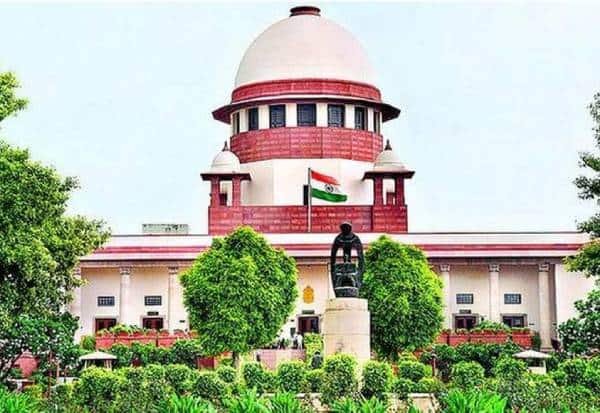
The Supreme Court has held that the general principles governing bail and exemption from prolonged incarceration apply even to cases booked under the Unlawful Activities (Prevention) Act (UAPA). The court reiterated the constitutional idea that “bail is the rule and jail is the exception,” flowing from Articles 21 and 22.
The observation came while hearing the bail plea of Syed Iftikhar Andrabi of Kupwara district in Jammu and Kashmir, who was arrested by the National Investigation Agency (NIA) in a case linked to alleged drug trafficking and terror funding. He has been in custody since 2020, with the trial yet to begin, resulting in more than five years of pre-trial detention.
A bench comprising Justices B.V. Nagarathna and Ujjal Bhuyan referred to the Supreme Court’s 2021 K.A. Najeeb ruling, which recognised inordinate trial delay and extended pre-trial imprisonment as valid grounds for granting bail. The bench also said it could not accept a two-judge order that had denied bail in the UAPA cases of Umar Khalid and Sharjeel Imam, who were arrested in connection with the 2020 Delhi riots.
The bench noted that conviction rates in UAPA cases across India are only around 2% to 6%, and are below 1% in Jammu and Kashmir, indicating that a large majority of accused ultimately face acquittal. In this backdrop, the court granted Andrabi bail with conditions, directing him to surrender his passport and appear at the local police station once every 15 days.