
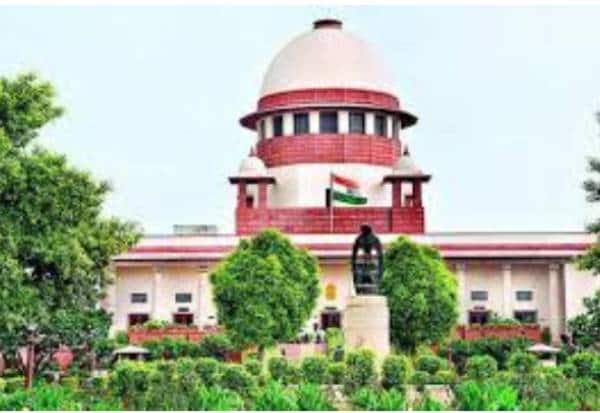
The Supreme Court has invoked its powers under Article 142 of the Constitution to direct High Courts across India to deliver judgments within three months in cases where arguments have concluded and orders are reserved. The court said matters involving personal liberty must be decided even faster.
The directions came while hearing a petition linked to a Jharkhand case from Simdega, where a man named Pawa Kerketa was allegedly killed in January 2009 in a land dispute. A trial court sentenced four accused to life imprisonment in June 2012, after which an appeal was filed in the Jharkhand High Court.
The Supreme Court noted delays in pronouncing and uploading final orders in the appeal and warned that such delays in delivering justice cannot be allowed. Chief Justice Suryakant, referring to his experience as a High Court judge, observed that he had not kept reserved matters pending beyond three months.
A bench of Chief Justice Suryakant and Justices Jaymalya Bagchi and Vipin M. Pancholi issued 10 guidelines for High Courts. These include same-day or next-day decisions on bail pleas, immediate communication of bail orders to prison authorities, release of prisoners on the same or next day, uploading full reasoned judgments within seven days even if only the operative part is read in court, and escalation to the Chief Justice if the three-month limit is breached—followed by possible transfer to another bench if delays persist.
The bench clarified that the directions are not aimed at any judge or court, but are intended to reduce delays and improve transparency in the justice delivery system. The guidelines are expected to help speed up disposal of pending matters and ensure timely access to justice.