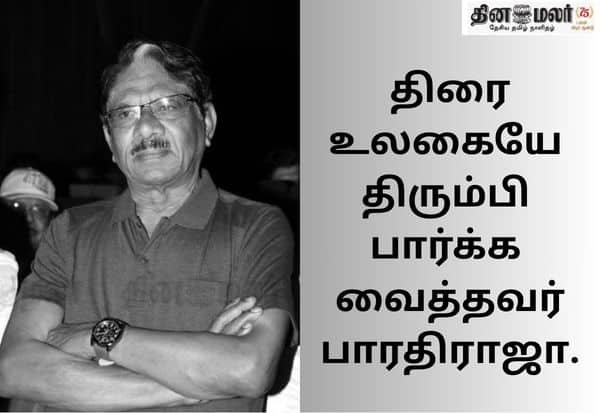
Bharathiraja is widely credited with steering Tamil cinema away from studio-bound storytelling and into a new, realistic direction rooted in village life. By bringing the textures of rural landscapes and the warmth of human relationships to the screen, he helped create a distinct cinematic language that many consider a turning point for the industry.
Born on July 17, 1941, in Allinagaram in Theni district, his real name is Chinnasamy. He completed his schooling in his hometown and, even as a student, developed a strong interest in literature, writing plays, acting and direction. He wrote and staged plays such as Oor Sirikkirathu and Summa Oru Kadhai.
After beginning his career as a health inspector, he moved to Chennai driven by his passion for cinema. While working in jobs including theatre and at a petrol bunk, he continued trying to enter films. He later worked as an assistant to director P. Pullayya and learned filmmaking craft under noted Kannada director Puttanna Kanagal.
His directorial debut came with 16 Vayathinile, after which his films increasingly used Tamil Nadu’s villages as living “studios.” He followed it up with the rural-set Kizhakke Pogum Rail, and later countered criticism that he could only make village films by directing Sigappu Rojakkal.
Over the years, he directed a long list of films including Mann Vaasana, Pudhumai Penn, Muthal Mariyadhai, Kadalora Kavithaigal, Vedham Pudhithu, Karuthamma, Pasumpon, Taj Mahal, Kadal Pookkal and Eeram Nilam, among others, and also made films in Telugu and Hindi. He acted in several films after debuting as an actor in Kallukkul Eeram, and produced films under Manoj Cine Creations. In his personal life, he married Chandraleela and had two children—Manoj and Janani; Manoj, who acted in films, died last year due to a heart attack.