
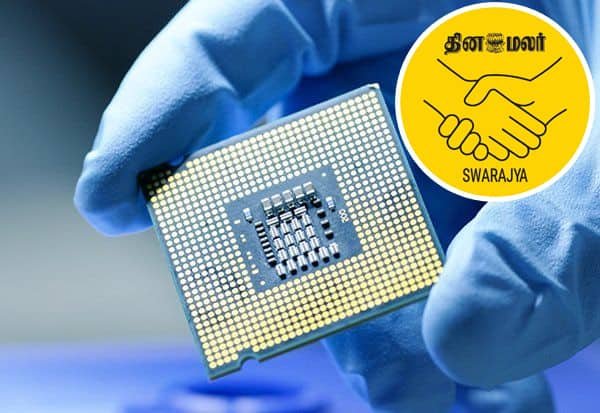
India has reached a stage where chip design, manufacturing and packaging can be done domestically, but building a strong end-to-end ecosystem remains the biggest hurdle. Industry voices say the missing links between designers, manufacturers and end users are preventing Indian chips from scaling in the local market.
At a facility in Greater Noida, Vervesemi’s co-founder Pratap Narayan Singh pointed to a chip used in weighing machines and said India needs about 500 crore chips annually, most of which are still imported. A colleague, Rakesh Malik, highlighted a chip made for ISRO, underscoring how high-value such components can be despite their tiny size.
Executives note that it can take up to two years for a chip to move from design to a customer. While design and final work may happen in India, much of the intermediate manufacturing is still done in countries such as Taiwan and Korea. Even though design accounts for up to half the value in semiconductors—and Indians form a significant share of global chip-design engineers—domestic production has not kept pace.
A key example is smart meters: around 5 crore electricity smart meters are installed in India each year, yet their chips are imported. Vervesemi says it has developed a domestic chip for this use, but market access and customer linkages are still not in place.
The article also points to the absence of “product companies” that bridge chip designers and electronics/automobile manufacturers, as seen globally with firms like Qualcomm, Broadcom and MediaTek. On the policy front, the Centre launched the ISM programme in 2021 with an outlay of Rs 76,000 crore, with multiple fabs and packaging units announced or under construction. However, high costs—such as mask sets for 28 nm chips costing up to Rs 19 crore, packaging charges being 3–5 times higher due to low order volumes, RBI’s Bill of Entry-related constraints, and rising chip-design salaries in Bengaluru—continue to challenge competitiveness and coordination across the “fabless–packaging–fab” layers.