
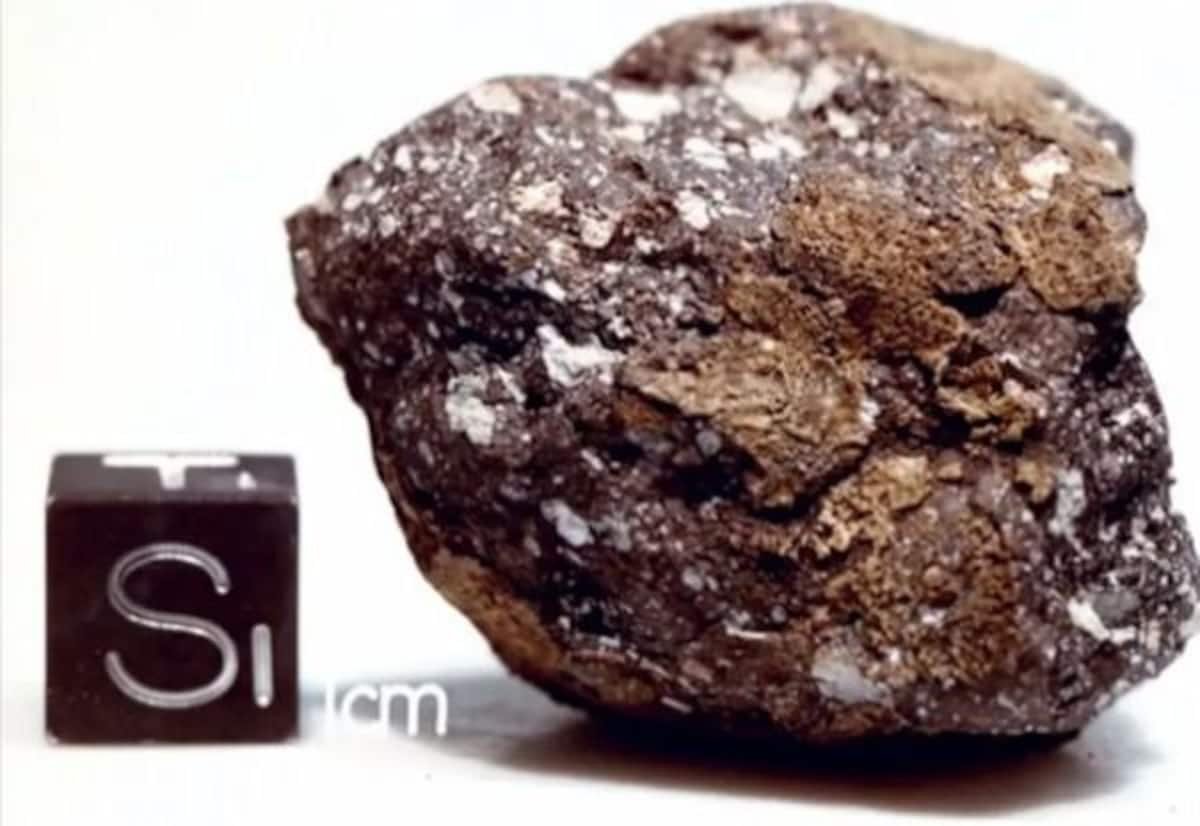
ISRO has reported that the chemical composition of the meteorite “ALHA 81005,” found in Antarctica, closely matches the chemistry of lunar soil measured by India’s Pragyan rover during the Chandrayaan-3 mission.
According to ISRO, Chandrayaan-3’s lander touched down successfully near the Moon’s south pole on August 23, 2023, and the landing site was named “Shiv Shakti.” The mission carried an advanced instrument, the Alpha Particle X-ray Spectrometer, to study surface materials using robotic measurements.
Data sent from the Moon were analysed by scientists at a physics laboratory in Ahmedabad. The results were found to be consistent with the known chemical signature of the ALHA 81005 meteorite, strengthening the possibility that the meteorite could be lunar in origin.
ISRO noted that the lunar soil at the rover’s location contains elements such as magnesium, aluminium, silicon, potassium, calcium, titanium and iron, with a composition different from samples associated with the Moon’s highland regions. At the landing site, aluminium was lower while iron and magnesium were higher—similar to the ALHA 81005 meteorite.
Based on this match, ISRO said the meteorite may have been ejected from deeper layers of the Moon by an impact millions of years ago and later reached Earth.