
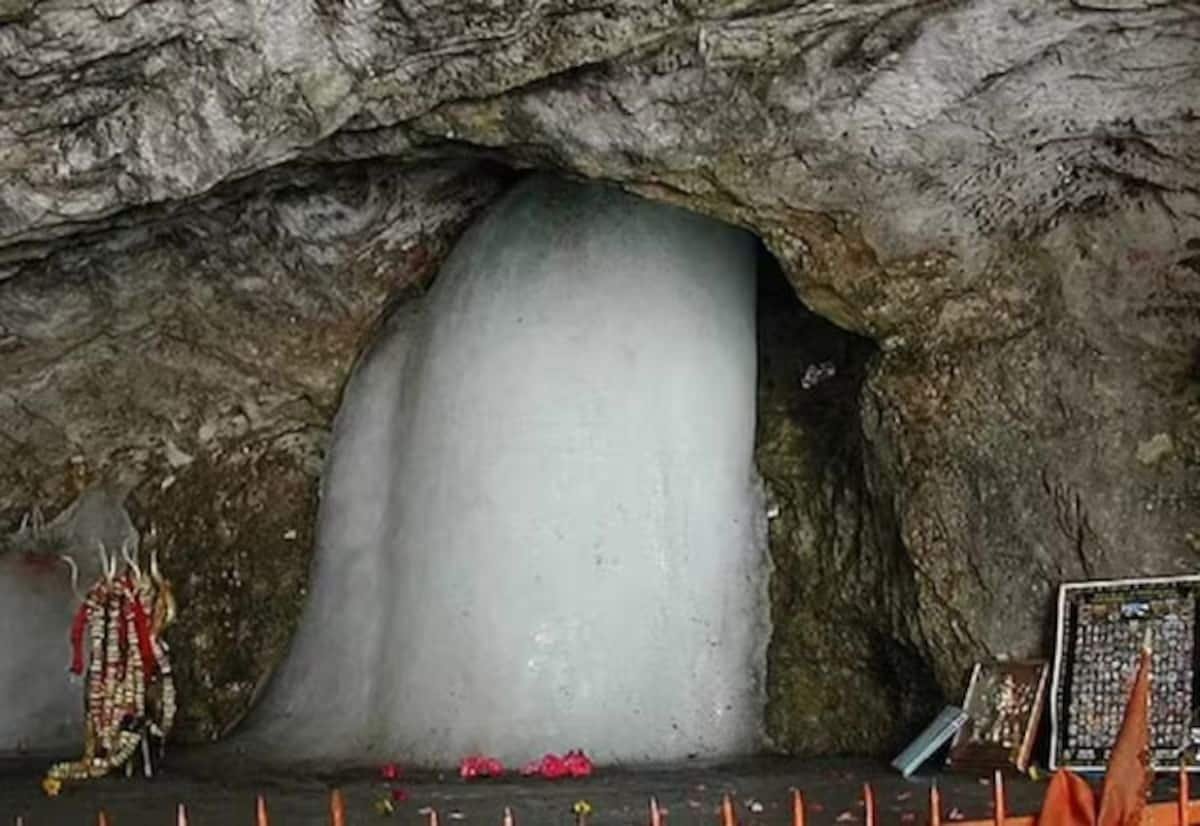
The naturally formed ice lingam inside the Amarnath cave in Jammu and Kashmir has melted at an unusually rapid pace this year, with reports saying nearly 90% of it disappeared within six days. The development has worried devotees as well as environmental observers.
The Amarnath cave, located in the Himalayan range of Anantnag district at around 12,756 feet above sea level, draws pilgrims from across the country each year to witness the seasonal ice formation. This season, interest among devotees has remained high.
Environmental scientist Padma Shri Dr Eklavya Sharma said Himalayan temperatures are rising faster than the global average. He noted that between 2000 and 2022, snowfall and glacier area in the Himalayas declined by more than 23%, pointing to broader climate change and global warming impacts.
Researchers also attribute the faster melting to changes in the cave’s microclimate linked to yatra-related arrangements. Generators, heavy machinery, solar lighting and temporary cooking facilities near the cave are said to be adding heat and disturbing the fragile environment.
Experts further say that large numbers of pilgrims entering the cave at the same time can increase body heat, humidity and air temperature, accelerating melt. They have urged limits on daily footfall, tighter control over heat-emitting structures near the cave, and stricter enforcement of environmental safeguards.