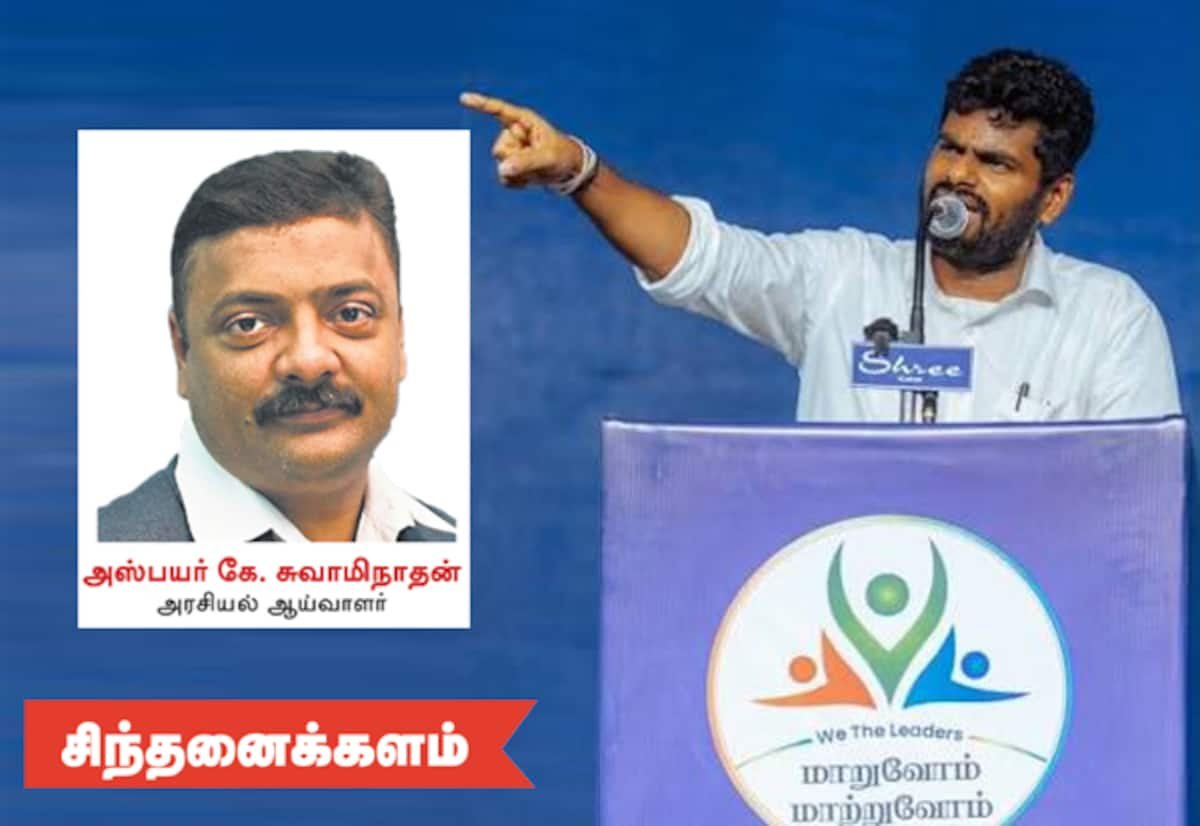
Most political parties in India focus on enrolling members, and some build cadres. But movements that place “creating leaders” at the centre of their politics are rare, a political analyst writes.
The very name of Annamalai’s initiative, “We the Leaders,” signals a different approach: not asking people to follow, but encouraging them to become leaders themselves. While Annamalai has repeatedly stressed the goal of building 50 lakh members before turning it into a political party, the analyst argues the bigger question is how many among them will emerge as local leaders, district-level coordinators and community organisers.
At the movement’s first state conference held in Pollachi, the platform projected itself beyond election-centric politics. The event foregrounded a social objective—“a drug-free Tamil Nadu”—and Annamalai also clarified that religion is not the movement’s core theme, positioning it as an effort to contribute to society before entering electoral competition.
The analyst notes the diversity and voluntary participation of attendees from across Tamil Nadu—youth, women, middle-aged and senior citizens, and people from varied professions—making it distinct from a routine campaign rally. This, he says, indicates that a significant section of the public is still searching for an alternative political path.
Ultimately, the piece argues that future political competition may be measured not only by votes or membership counts, but by leadership creation: how many young people are drawn into social work, how many women are given responsibilities, how much grassroots participation is built, and how many community problems are addressed. If Annamalai can successfully take politics beyond “cadre politics” into “leadership-building politics,” it could mark a new chapter in Tamil Nadu’s political evolution, the analyst concludes.