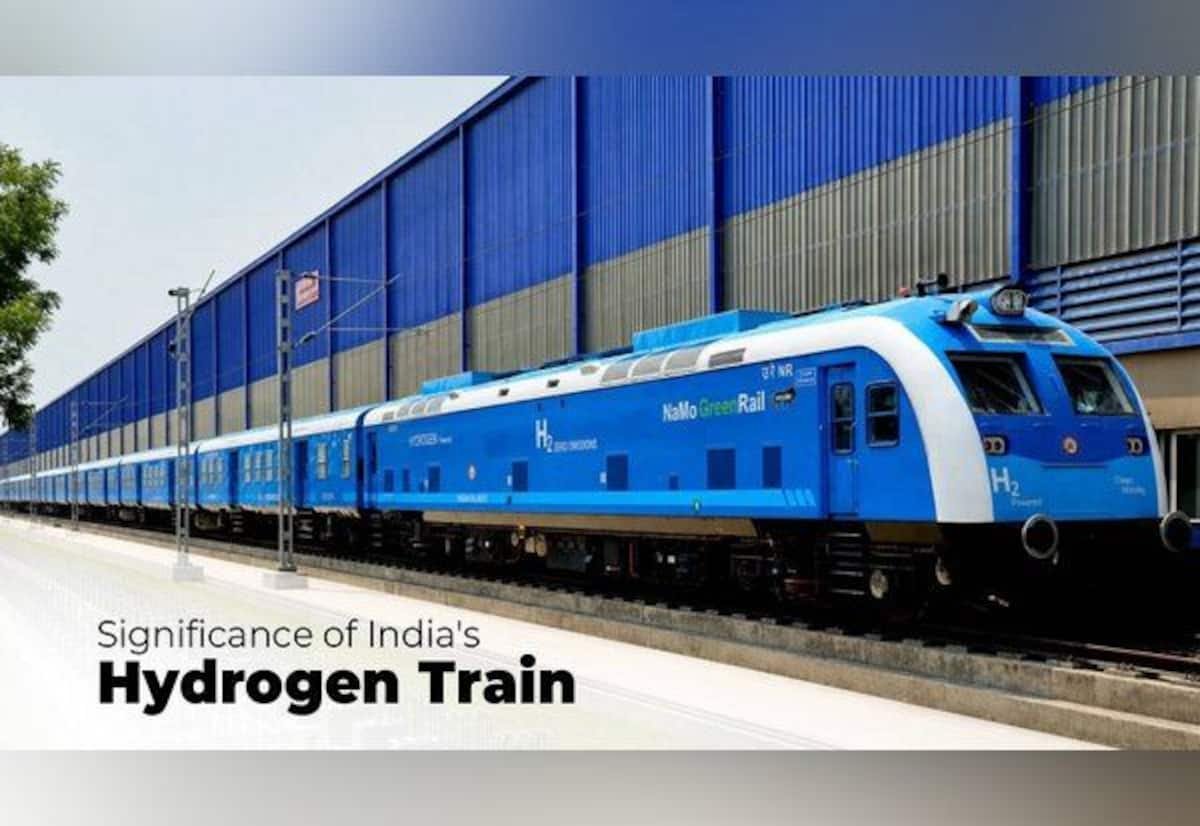
India has taken a major step in green rail transport by launching its first hydrogen-powered train service, positioning the country among nations experimenting with hydrogen mobility. The inaugural run was flagged off by Prime Minister Narendra Modi on the Jind–Sonipat route in Haryana.
Unlike most hydrogen passenger trains abroad that typically operate with two or three coaches on short routes, the Indian Railways service runs with 10 coaches and is designed to carry about 2,600 passengers. The project is being projected as the world’s longest hydrogen passenger train in terms of formation.
The train stores high-pressure hydrogen in a specially designed, safety-focused compartment. Electricity is generated through a chemical reaction with oxygen, enabling the train to run without emitting carbon or black smoke; water vapour is the only by-product.
Safety systems include an automatic shutdown mechanism that can stop operations and cut off hydrogen supply if abnormal activity is detected. The driver’s cabin has been designed with safety in mind, and a facility is provided to help move the train to a safe location during emergencies.
Supporting infrastructure has also been set up, including a large hydrogen refuelling station in Jind with storage capacity of up to 3,000 kg at a time. Based on the Jind–Sonipat experience, the Railways is considering introducing hydrogen trains on other heritage routes, including Kalka–Shimla, with fares stated to range from Rs 5 to Rs 25 depending on distance.