
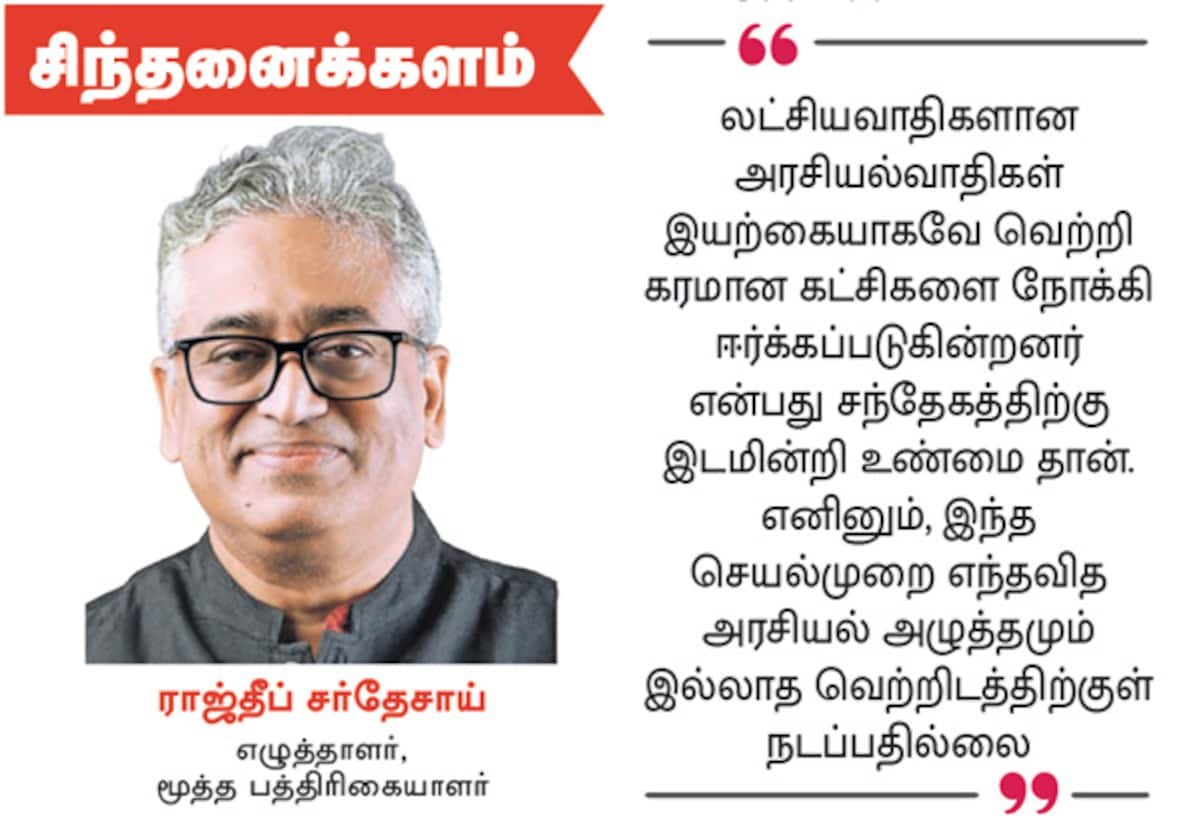
Party switching—once a source of public shame for politicians—has begun to look routine in Indian politics, journalist and author Rajdeep Sardesai writes. He points to recent episodes where disgruntled MPs held open discussions with senior BJP leaders in Delhi, showing little secrecy or hesitation.
In Maharashtra, he notes, a group of unhappy MPs travelled by private aircraft, stayed in luxury hotels and negotiated their political future under heavy security—more like corporate deal-making than the conduct expected of elected representatives.
Sardesai argues that the striking change is not the existence of defections, but the disappearance of anxiety about public opinion. He says politics is increasingly treated like a business, where the terms of the bargain are widely understood.
He cites an instance where a Shiv Sena MP reportedly admitted that switching sides was necessary to secure development funds for constituency projects—suggesting that access to government resources has become part of the deal.
While supporters counter that defections existed even under Congress rule, Sardesai says the nature of the phenomenon has shifted. Over the past decade, he writes, the BJP has built an unmatched electoral machine—organisational strength, funding, communication tools and leadership—turning defections from isolated incidents into a strategy to expand influence and weaken opponents, as seen in Madhya Pradesh, Maharashtra and parts of the Northeast.