Tamil Nadu’s higher education administration has been under strain as 17 of the state’s 24 government universities have been functioning without vice-chancellors for the past three years, according to the article. In the absence of VCs, a three-member committee has been handling key responsibilities, with members based in different locations.
The piece notes that the Higher Education Secretary has had to step in for several statutory functions—attending governing and finance committee meetings of 17 universities and signing approvals on hundreds of files. This, it argues, has led to delays across the system, from appointments and promotions to routine academic processes such as signing degree certificates.
The article attributes the stalemate to multiple factors: the Governor’s insistence that a UGC representative be included in VC search committees as per the UGC framework; the pending assent to a 2022 bill passed earlier seeking to make the Chief Minister the Chancellor; and ongoing litigation in the Madras High Court and the Supreme Court, along with appeals.
It also points to a trust deficit between the government and Raj Bhavan, citing concerns over past irregularities in selections and competing fears about undue influence if Governor/UGC nominees dominate the process. The current government’s decision, taken at a high-level meeting chaired by the Chief Minister on July 24, to amend university statutes to reconstitute search committees is described as a welcome step.
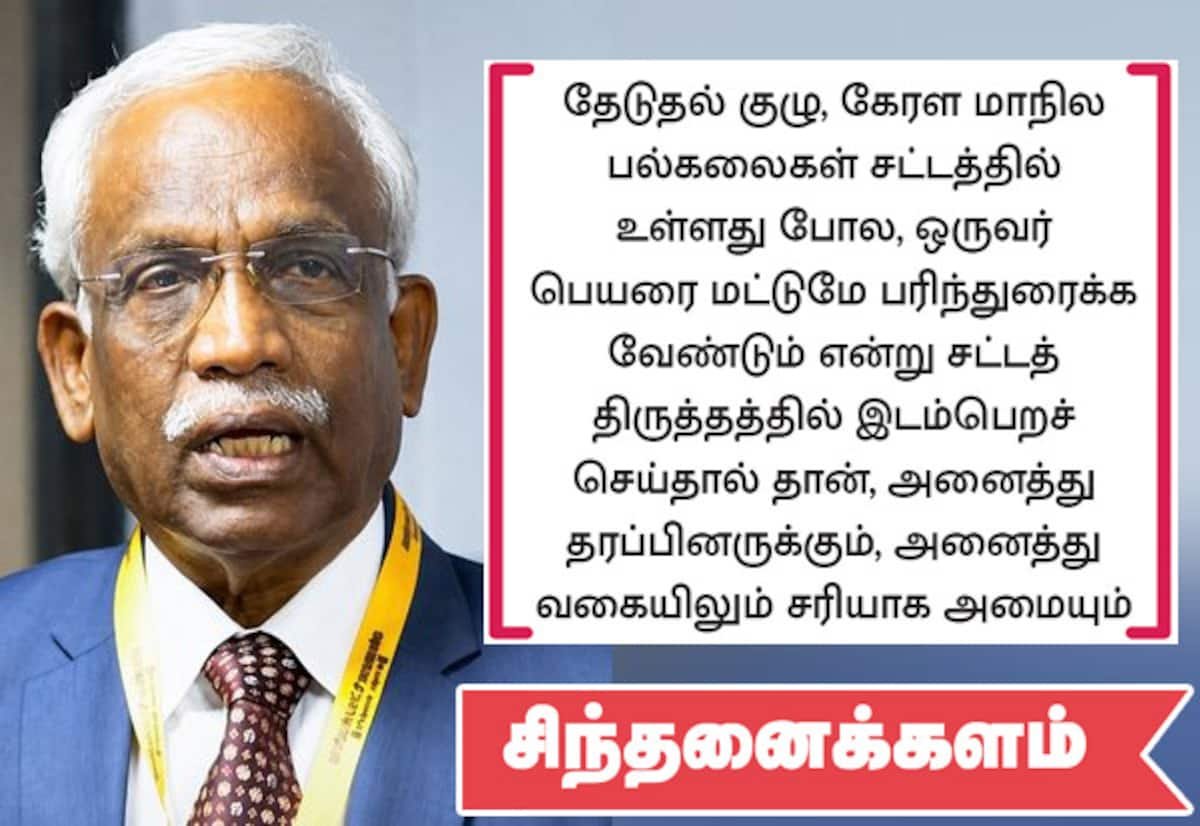
However, the author argues that a durable solution would require a legal amendment to change the recommendation format—so that the search committee proposes a single name, similar to provisions in Kerala’s university law, instead of sending a panel of three names to the Governor. Such a change, the article says, could reduce disputes and prevent repeated court challenges, with students and the higher education sector bearing the brunt of delays.