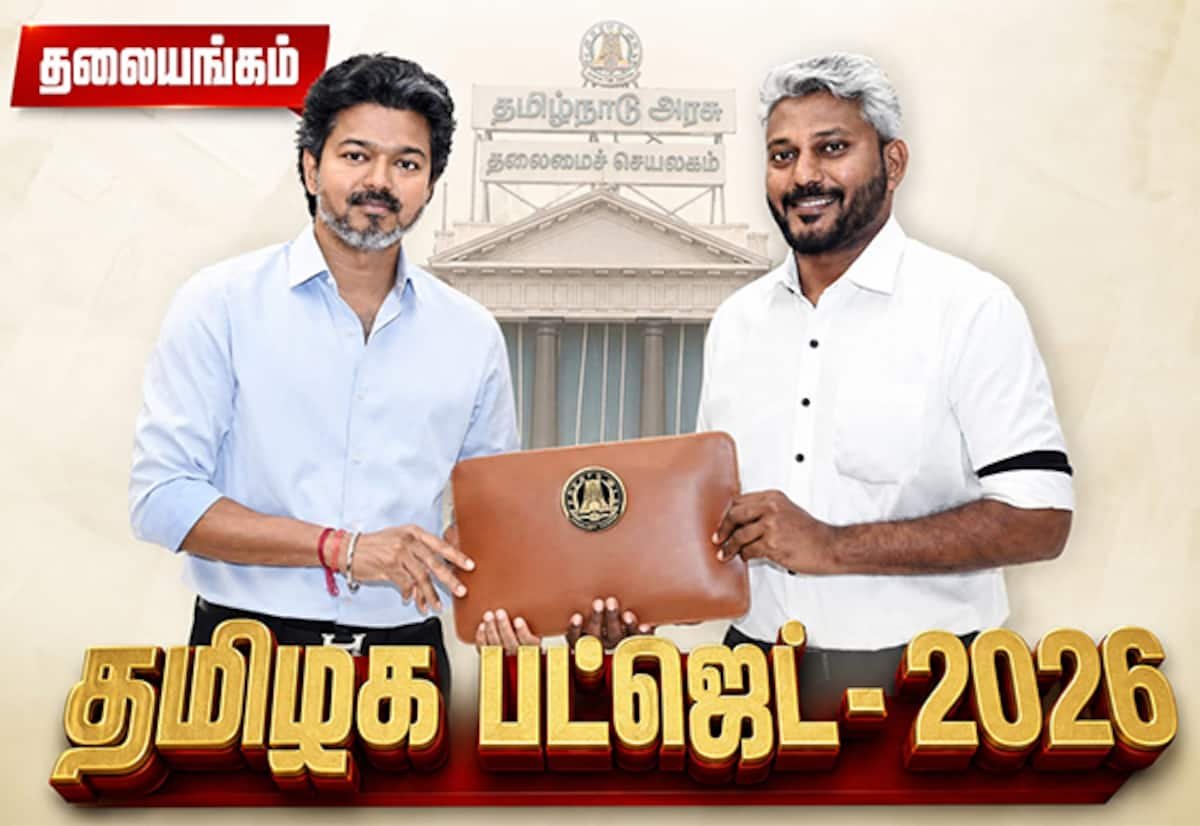
Tamil Nadu’s first budget under Chief Minister Vijay’s Tamilaga Vettri Kazhagam (TVK) government was presented in the Assembly on August 5 by Finance Minister Mariya Wilson. The budget came amid expectations that several election-time promises would be reflected in the first financial plan.
Among the announcements were a one-sovereign gold coin and a silk saree for women’s marriages, and modern bicycles with helmets for school students. The government also proposed raising medical insurance coverage for government employees from ₹5 lakh to ₹7 lakh, and increasing coverage for certain diseases from ₹10 lakh to ₹12 lakh.
The budget also included an investment subsidy of ₹5 lakh for self-help groups, an increase in workdays under the rural employment scheme to 150 days, and distribution of packaged wheat flour through ration shops. Another measure announced was a one-gram gold ring for babies born in government hospitals under the “maternal uncle gold ring” scheme.
Officials said the state’s total revenue is ₹3,50,027 crore and expenditure is ₹4,05,802 crore, with a revenue deficit of ₹55,775 crore. The finance department secretary also stated that ₹21,000 crore was borrowed in the last three months to implement welfare schemes and other commitments.
The budget has drawn criticism from the opposition, including allegations that several earlier DMK-era schemes were merely renamed. Critics also said some campaign promises—such as raising the women’s entitlement amount to ₹2,500, providing six free LPG cylinders annually, and announcing farm loan waivers—were not included, and that allocations for school education were reduced. The government’s view, as reflected in the budget narrative, is that the state is under severe fiscal stress and that the plan prioritises continuing beneficial schemes, avoiding wasteful spending, and preventing the debt burden from rising further, with reforms expected to enable fulfilment of promises in the coming years.