
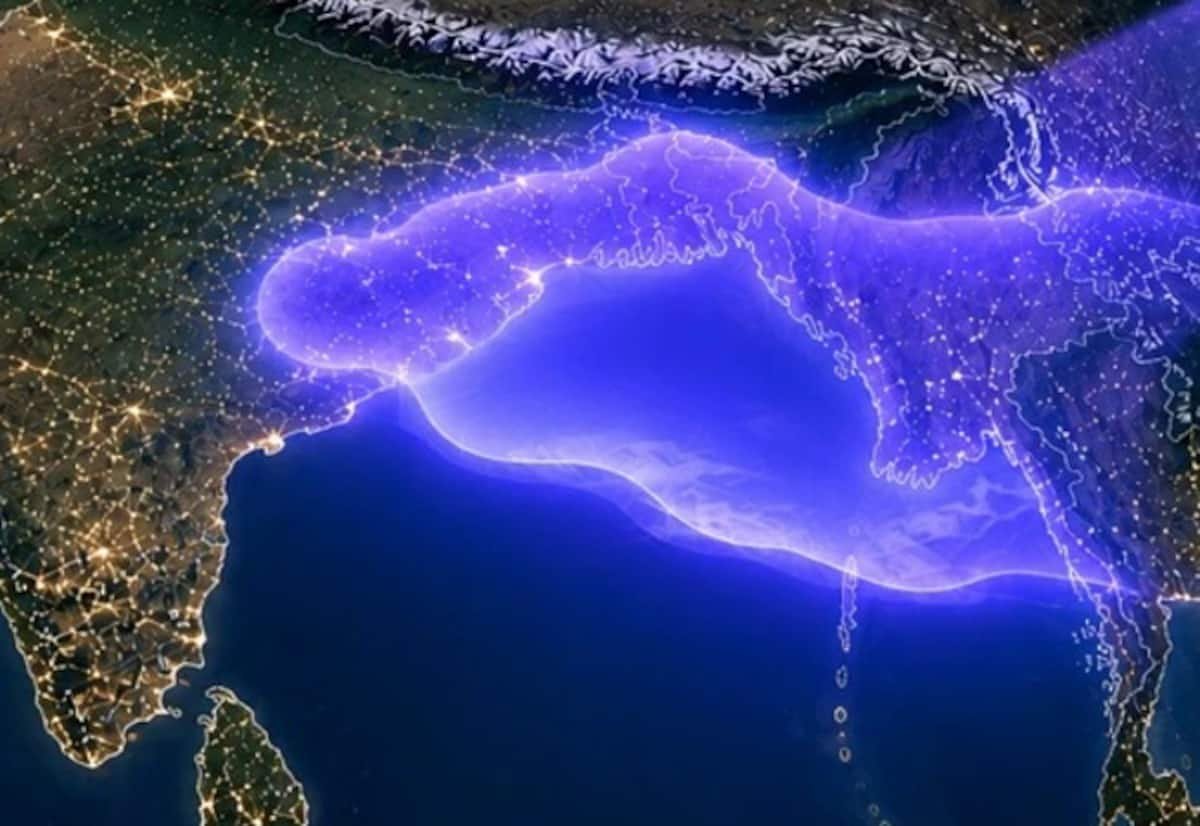
Scientists have detected an unusually dense ozone layer over the north Bay of Bengal, at an altitude of about 21–23 km, higher than what is typically observed. The region corresponds to areas above India’s northeastern states, according to the study.
Multiple research agencies routinely monitor Earth’s upper atmosphere, and Indian institutions have been studying ozone conditions over the country. During this work, researchers identified a thicker-than-normal, high-concentration ozone layer over the northern Bay of Bengal.
The observation has been documented through India’s atmospheric research programme NETHRATE-ASMA, and the results were published in the US journal Earth and Space Science. Ozone (O3), found mainly in the stratosphere around 25–30 km, plays a key role in limiting harmful radiation such as ultraviolet rays reaching Earth.
The study used continuous measurements from 206.5 MHz radars operating at Haringhata, Gadanki and Kochi, coordinated through the Aryabhatta Research Institute of Observational Sciences (ARIES) in Nainital, Uttarakhand. Researchers reported that the anomalous ozone layer persisted for more than a day.
Scientists said the event likely formed when ozone-rich air moved downward and then rose again, creating an unexpected concentration pattern. The finding is expected to improve understanding of how air currents transport ozone through the stratosphere, while ISRO continues to monitor such changes.