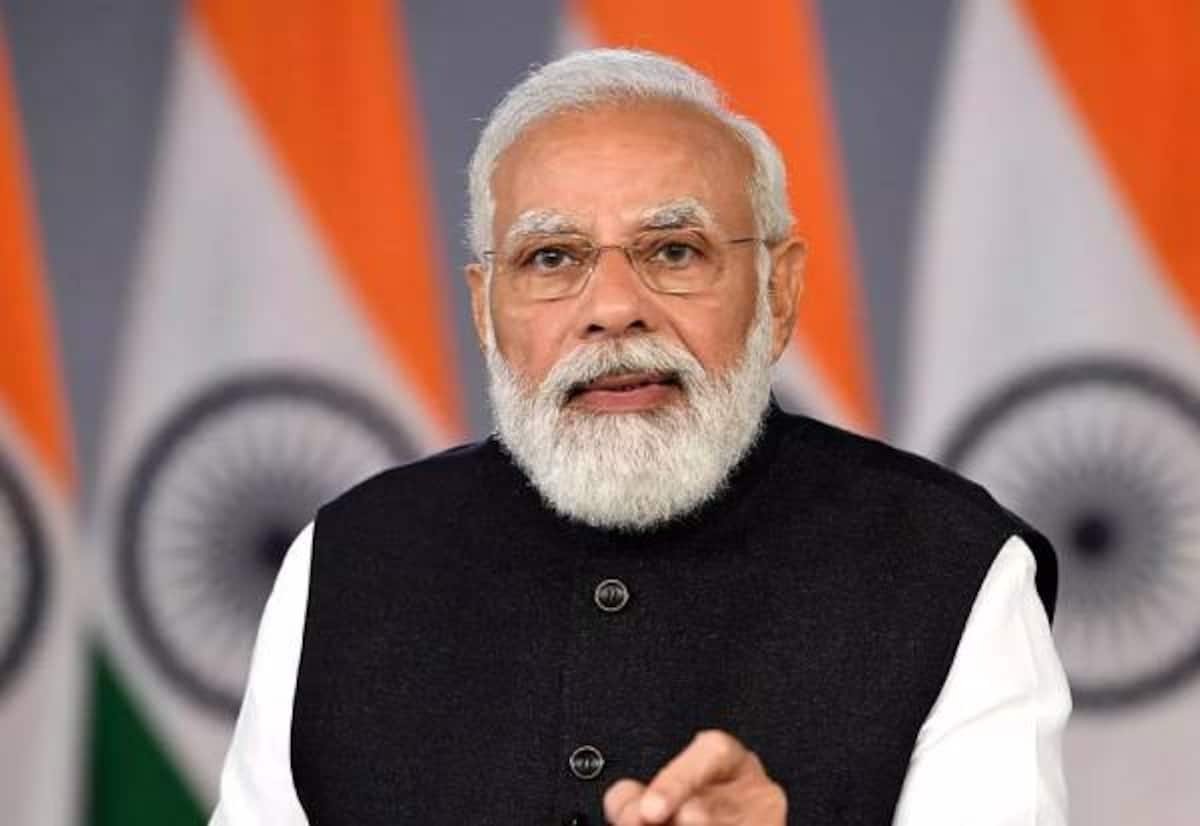
Prime Minister Narendra Modi on Saturday said the responsibility for carbon emissions is often unfairly placed on developing countries, even as developed nations continue to emit far more. He noted that India’s per-capita carbon footprint remains less than half of the global average, while developed countries’ per-capita emissions are about six times higher than India’s.
Speaking at the inauguration of the two-day international conference on “The Future of Environmental and Climate Dynamics” in New Delhi, Modi said India has been consistently raising these facts on global platforms. The event is being organised by the National Green Tribunal and has participation from 17 countries.
The Prime Minister said India is working with other nations to frame new standards for environmental protection, and stressed that the country’s growth is not only fast but also sustainable. He claimed India has made significant progress across environmental sectors over the past 12 years.
Highlighting renewable energy, Modi said India is the only G20 country to have met its COP21 commitments ahead of schedule. He pointed to growth in solar power capacity from 2 GW 12 years ago to over 160 GW now, and said rooftop solar panels have been installed in more than 50 lakh homes under the PM Surya Ghar free electricity scheme, with government support of Rs 80,000 per household.
He also cited a threefold rise in wind power capacity, higher hydropower capacity, and faster work in nuclear energy. Modi referred to the launch of India’s first hydrogen train—described as the world’s longest hydrogen train—as a marker of cleaner transport, and said annual electric vehicle sales have risen from about 3,000 before 2014 to 25 lakh last year. He added that India has banned single-use plastics and is promoting a circular economy based on reducing, reusing and recycling, with thousands of tonnes of waste recycled daily.