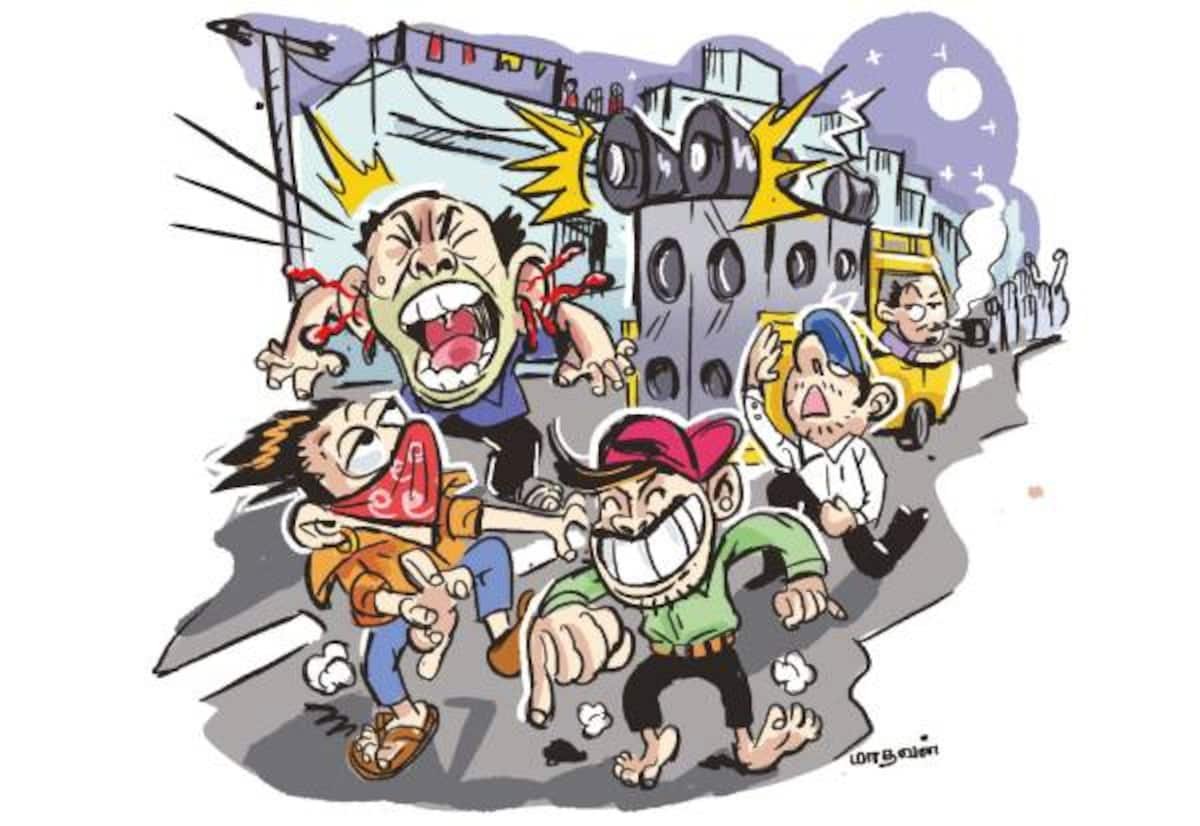
A recent killing in Delhi has brought renewed attention to noise pollution and the violence that can erupt around it. Manipur-born rock musician and music teacher Chongtham Vikram Singh, 47, was allegedly attacked after asking a group outside his home to lower deafening loudspeaker noise; seven people have been arrested in the case.
The incident is not isolated. The report notes that during last year’s Holi celebrations, a person who requested reduced loudspeaker volume to protect students preparing for public exams was also beaten to death. As high-decibel music becomes routine at public celebrations, those who object are increasingly facing brutal assaults.
With the festival season stretching through December—along with frequent weddings—DJ systems, public-address equipment and high-powered sound setups are widely used. Loudspeakers mounted on procession vehicles can expose residents along routes to prolonged noise, making the key issue not the celebration itself but the timing, duration and volume.
Medical studies cited in the report warn that such intense sound exposure can contribute to heart attacks, diabetes, high blood pressure, insomnia, hearing loss and severe mental stress, with pregnant women, infants and the elderly particularly vulnerable. The impact extends beyond humans: in Matheran, Maharashtra, even tourists’ Bluetooth speakers are said to be troubling wildlife and birds.
Rules restrict loudspeaker use from 10 pm to 6 am in most places (except enclosed venues), and states can grant limited exemptions for cultural events for up to 15 days a year. Yet enforcement remains uneven: NCRB data for 2024 shows 8,639 cases registered nationwide for violating noise rules—8,264 in Rajasthan alone—while Tamil Nadu recorded one case. The Supreme Court has previously said noise in the name of religion or festivals cannot be allowed to disturb others’ sleep, health and peace, and the Centre has told the Lok Sabha that systematic studies on health impacts from horns and loudspeakers are lacking.