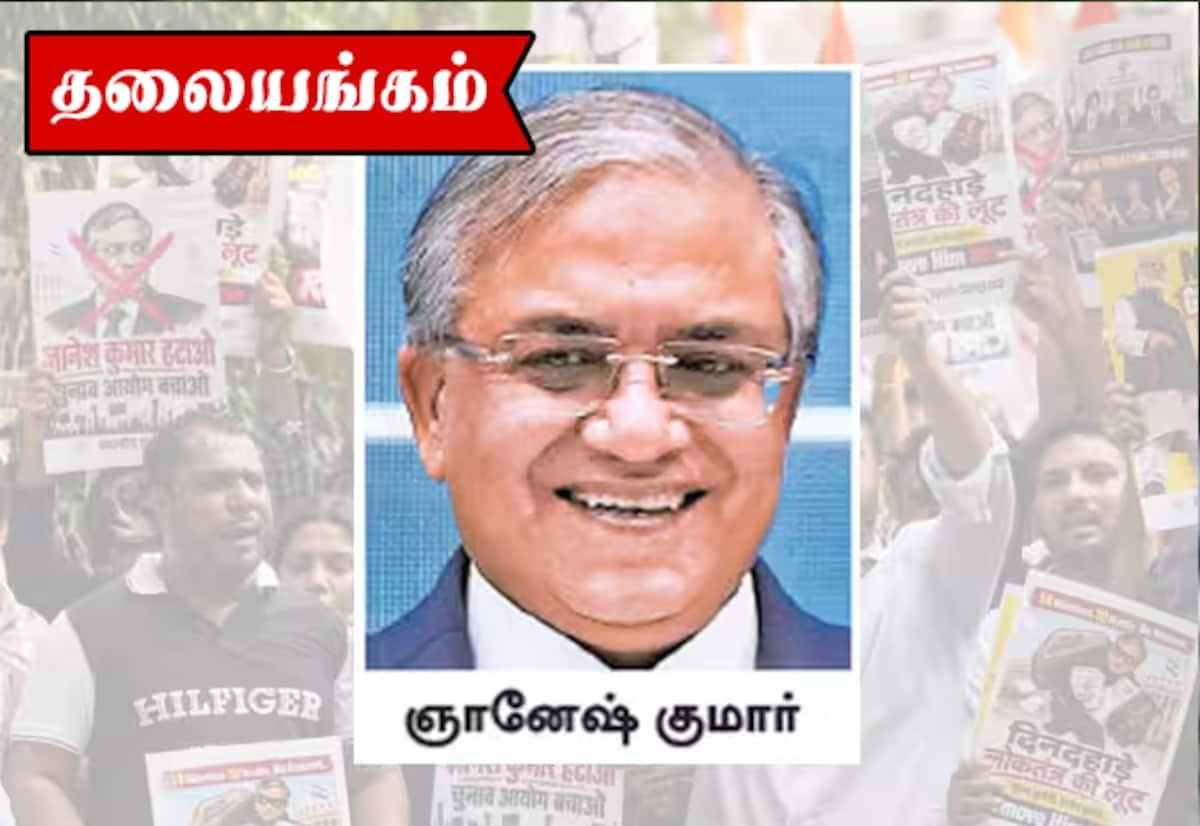
Recent media reports about the functioning of the Election Commission have triggered a political storm, with some parties demanding that Chief Election Commissioner Gyanesh Kumar step down. They have also announced protests, alleging that the intensive voter list revision carried out over the past 15 months is unlawful.
The criticism centres on claims that several contentious decisions were taken without following due procedure and without adequate consultation with other Election Commissioners. It has been reported that, over the last 10 months, Election Commissioners Sukhbir Singh Sandhu and Vivek Joshi formally recorded differing views at least 14 times, including four dissent notes on a single day.
In its response, the Election Commission said differences of opinion are natural in a multi-member body. It added that all orders are issued with full legal authority under the Chief Election Commissioner and other Election Commissioners Act, 2023.
The article also points to earlier instances of disagreement within the Commission. After the body became a three-member commission in 1993, then CEC T.N. Seshan clashed with Election Commissioners M.S. Gill and G.V.G. Krishnamurthy; the Supreme Court upheld their appointments and affirmed equal status for all three in policy decisions.
Further examples cited include the 2009 episode in which CEC N. Gopalaswami wrote to the President seeking the removal of Election Commissioner Navin Chawla, and the 2019 decision on complaints against Prime Minister Narendra Modi and then BJP president Amit Shah, where Election Commissioner Ashok Lavasa recorded a dissent. Against this backdrop, the piece argues that dissent during deliberations is not unusual and that politicising such differences to seek advantage is inappropriate.