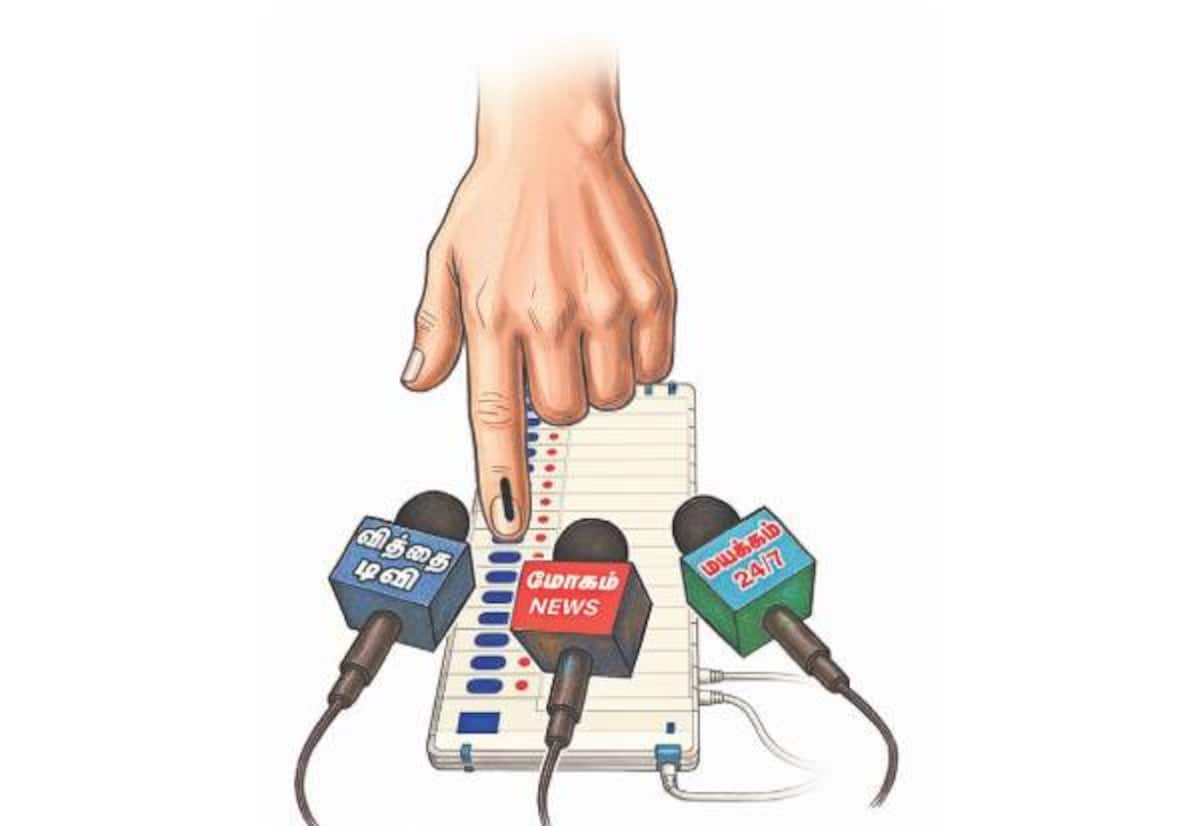
As the 2026 by-election approaches, a commentary article urges voters to reflect on a series of political contradictions and campaign claims. Framed with religious slogans, it asks whether recent exchanges and messaging truly align with the image parties seek to project.
One question targets a back-and-forth over the use of “Om Shakti” and “Om Kali” in political satire, and whether such responses amount to standing with Hindu sentiments or merely extending the mockery. Another raises expectations around the speedy conclusion of a case involving Veeramani and whether voters genuinely believe a conviction would translate into improved law and order.
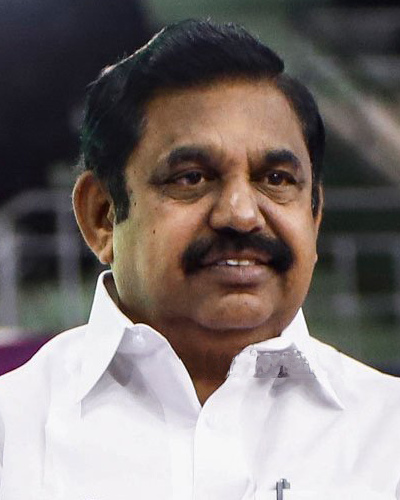
The piece also probes the idea that “betrayal” has no place in politics, suggesting that a by-election outcome could send a lesson that might even push Edappadi K. Palaniswami to attempt unifying a fragmented AIADMK. It further asks when governments that offer incentives—such as attracting people to government hospitals and schools—will instead create conditions where citizens choose these institutions for quality care and education.
On enforcement and messaging, the article questions whether a dramatic report about stopping gutka smuggling implies broader success against illegal trade, or merely highlights a single intercepted incident. It also challenges repeated campaign lines that the contest is “only between two,” arguing such framing dilutes the spirit of evaluating ideas regardless of who speaks.
Finally, it recalls Thurai Vaiko’s rapid-switch campaign rhetoric—condemning a “evil force” said to be ruining Tamil Nadu while praising the DMK as a “great movement”—and ends by asking whether the 2026 by-election is a moment of pity or a remedy.