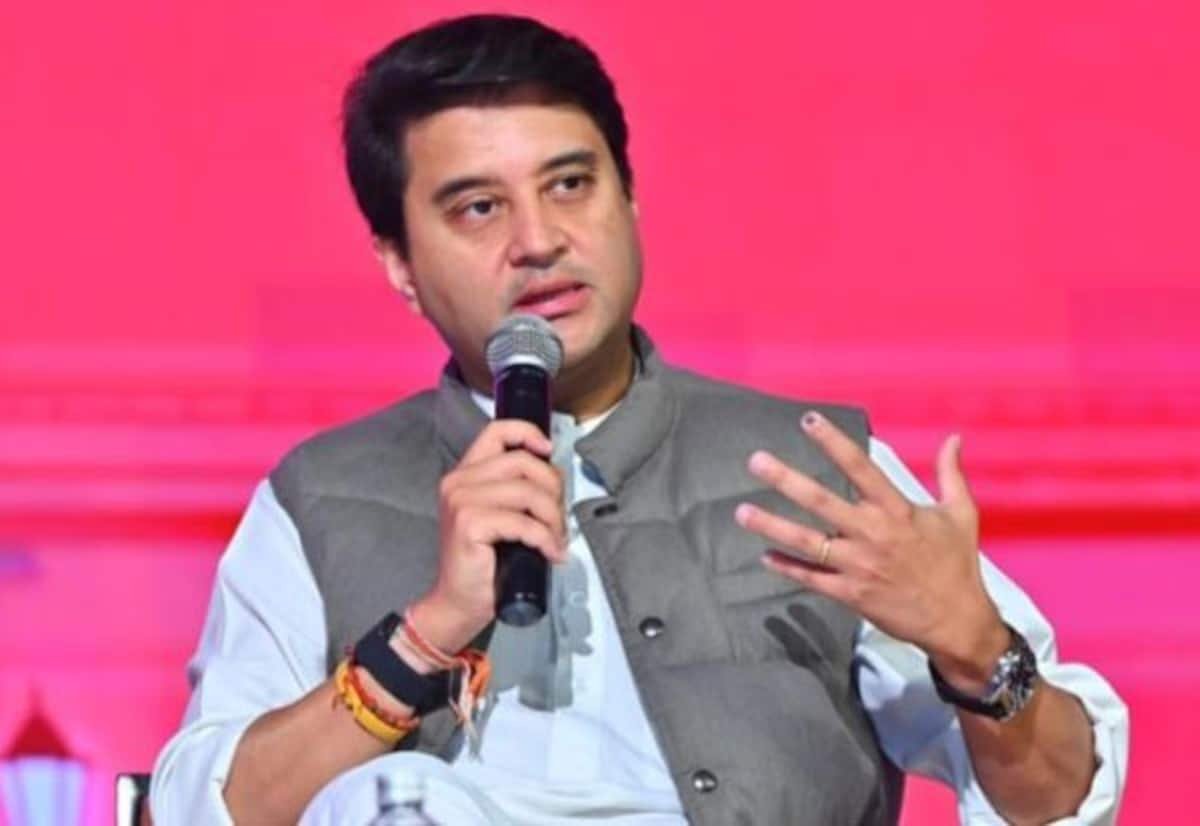
Union Minister Jyotiraditya Scindia on Thursday said India will not compromise on national security while allowing satellite-based internet services, amid a public debate around Elon Musk’s Starlink and its entry into the Indian market.
The discussion intensified after Musk alleged that Starlink was being denied permission in India in the name of security, and questioned why approvals were not being granted if Indian laws are respected. The issue drew political reactions as Congress leader Rahul Gandhi also weighed in, triggering criticism from those who argue satellite communications are closely linked to national security.
A serving woman military officer, quoted in the debate, pointed to the Ukraine war as an example. She said Starlink helped restore connectivity there after disruptions, but later refused service in Crimea citing concerns that it could escalate conflict—raising questions about relying on decisions taken outside India during war or a national emergency.
Speaking at the Mobile Congress 2026 event in Delhi, Scindia said three companies have been issued licences for satellite communication services in India, and each can begin operations only after independently fulfilling security requirements and eligibility conditions. He noted that India has 110 crore broadband connections and that 5G has been successfully rolled out to 99.98% of districts.
Scindia also criticised the Congress for what he called a confusing stand on the licensing issue, and said India would not allow any monopoly. He reiterated that once licensed firms complete mandated security measures, they can start services—adding that the rule applies to all licensees, including Starlink.