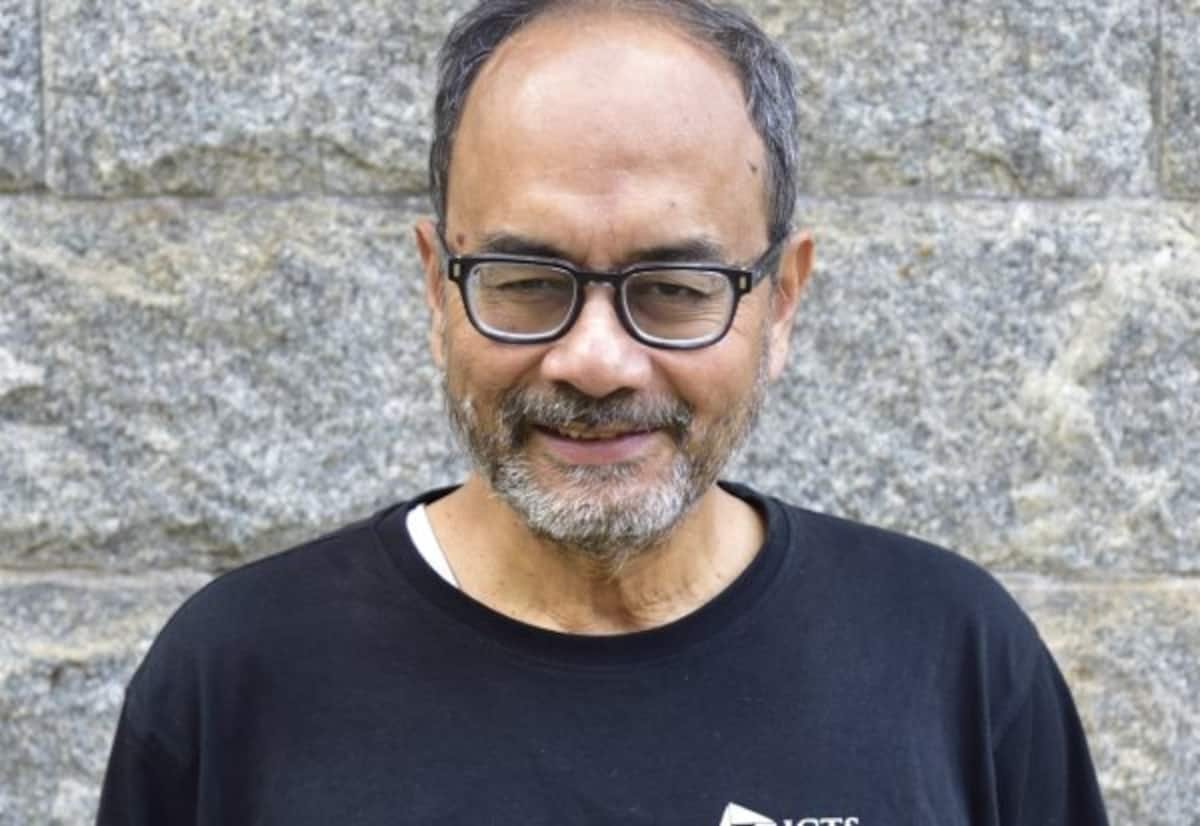
Indian physicist Ashoke Sen (70), born in Kolkata, has received international recognition for his work in theoretical physics. He is currently a professor at the International Centre for Theoretical Sciences under the Tata Institute of Fundamental Research (TIFR) in Bengaluru.
Sen is widely regarded as a leading researcher in string theory, an area that seeks to explain the fundamental laws of physics by unifying matter and forces. The framework explores how the basic building blocks of nature might be described in a single, coherent theory.
Unlike conventional physics, which often treats particles such as the electron as point-like objects, string theory proposes that they could be extremely tiny string-like structures. According to the theory, different particle properties may arise from different patterns of vibration of these strings.
For his research in this field, Sen has been awarded the 2026 Oskar Klein Medal in Stockholm, Sweden. The medal, named after physicist Oskar Klein, was instituted in 1988.
Sen has previously received several major honours, including the Padma Shri (2001), the Breakthrough Prize in Fundamental Physics (2012), and the Padma Bhushan (2013).