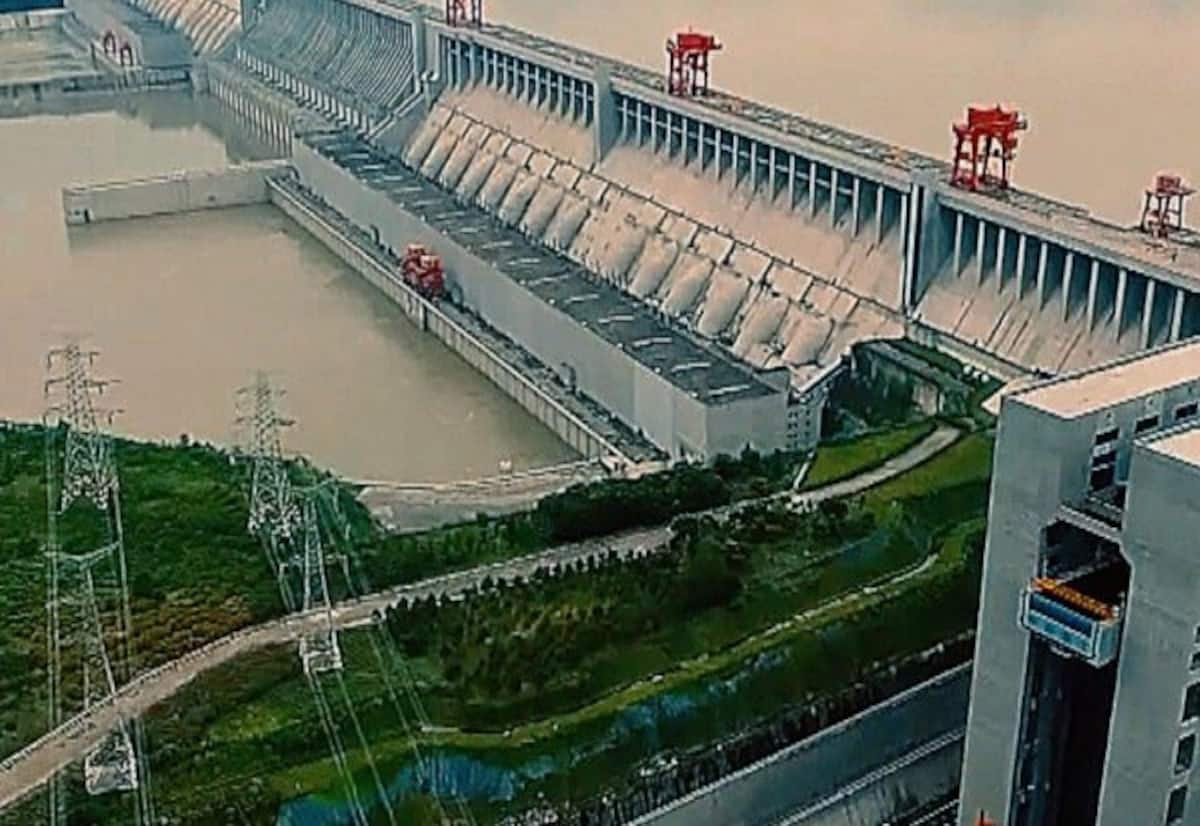
Chinese researchers have warned that a massive dam being built by China on the Yarlung Tsangpo river in Tibet could increase flood risks downstream, including in India’s Brahmaputra basin.
The Yarlung Tsangpo originates in Tibet and is known as the Brahmaputra after it enters Arunachal Pradesh. China is constructing what is described as the world’s largest dam across the river, with an estimated cost of Rs 1,600 crore, in the deep Motuo valley in southeastern Tibet near the disputed border with India.
According to researchers from the Chinese Academy of Sciences and Yunnan University, the scale of the reservoir means large volumes of water would be stored. They cautioned that if the reservoir is already near danger levels and heavy rainfall occurs, dam gates could be opened suddenly, sending a surge of water downstream and affecting communities in India and Bangladesh.
The researchers said their warning is based on an analysis of the river’s historical flow records from 1325 to 2020. They also pointed to faster warming on the Tibetan Plateau—reported to be at twice the global average—which could accelerate glacier melt and contribute to major floods.
In addition, they noted that the dam site lies in an earthquake-prone region, raising concerns about potential risks to the structure and downstream safety.