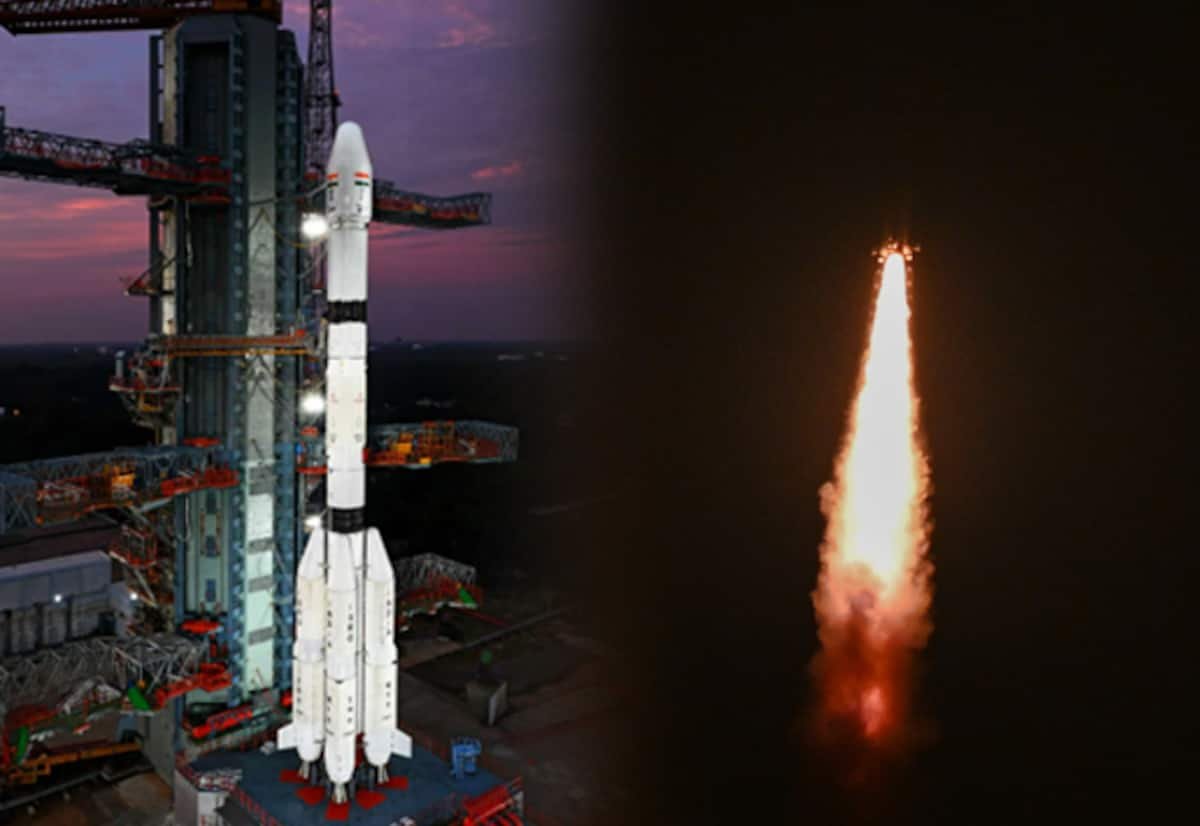
ISRO successfully launched the GSLV-F18 rocket late Friday night from the second launch pad at the Satish Dhawan Space Centre, Sriharikota. The mission carried NVS-03, an indigenously built advanced navigation satellite, and lifted off at 11:51 pm.
According to the mission sequence, the satellite’s flight proceeded as planned and it was accurately injected into its designated Earth orbit. ISRO scientists at the control centre celebrated the successful launch and orbital placement.
The GSLV, which faced multiple technical challenges in its early years, has steadily matured through a series of successful missions. Standing about 50 metres tall and weighing around 420 tonnes, GSLV-F18 marked the vehicle’s 20th flight.
NVS-03, weighing about 2,250 kg, is the fourth navigation satellite in India’s constellation and is designed for a 12-year operational life. A key highlight is the inclusion of a high-quality, fully indigenous rubidium atomic clock, aimed at improving timing accuracy after issues reported with previously sourced clocks.
The satellite is intended to further strengthen NavIC, reducing dependence on the US GPS system. It is expected to provide precise navigation services across India and up to about 1,500 km beyond the country’s borders, supporting both civilian use—through added L1-band signals for wider device adoption—and defence requirements for accurate tracking.