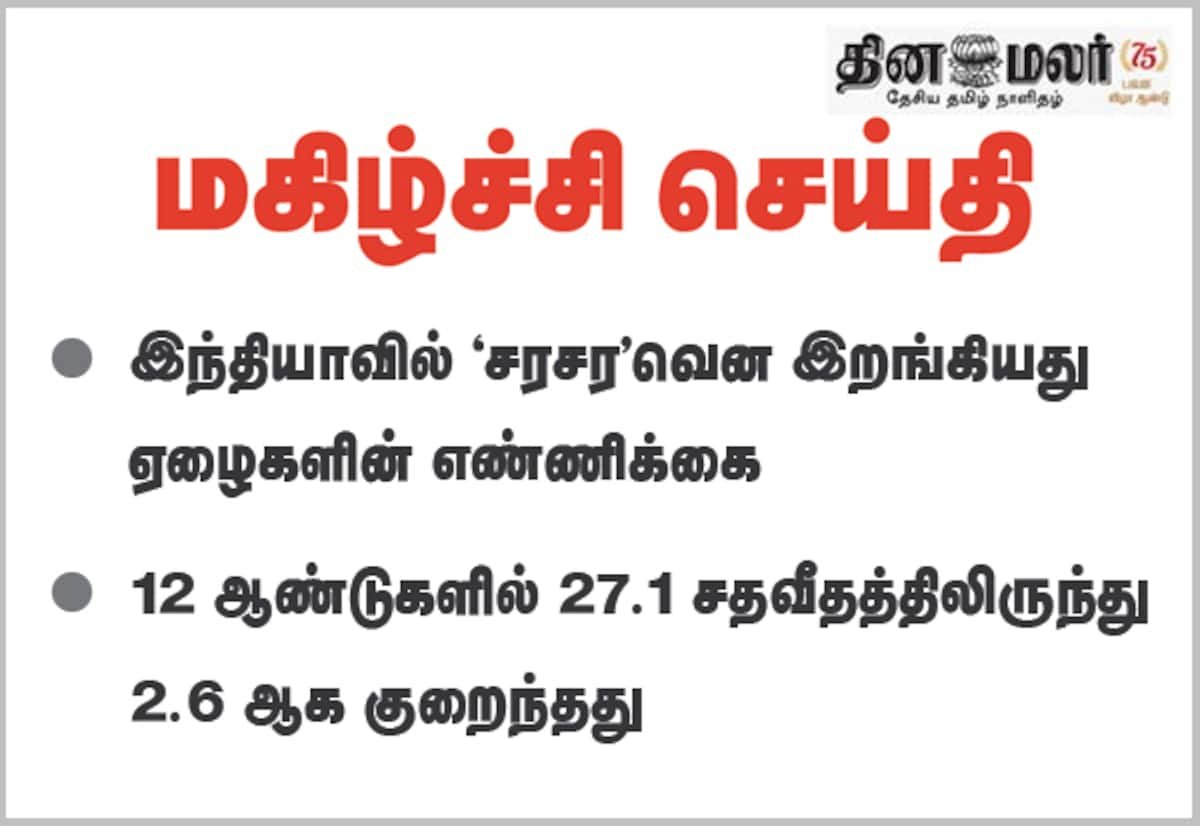
New Delhi: India has seen a steep decline in poverty over the past 12 years, according to a recent World Bank brief on poverty and equity. The report estimates that the country’s extreme poverty rate fell from 27.1% in 2011 to 2.6% in 2023.
The World Bank said this shift implies that about 496 million people moved out of poverty between 2011 and 2023. The assessment is based on multiple indicators including income and consumption, education, health and other measures of living standards.
The report also tracked a broader low-income threshold. It found that the share of people living on less than Rs 400 a day declined from 57.7% to 16.1% over the same period. Extreme poverty, as defined in the note, refers to living on less than Rs 300 a day.
Rising consumption, higher employment—especially increased job opportunities for rural women—and the expansion of welfare measures such as food subsidies were cited as key drivers behind the reduction. However, the report noted that income inequality remains significant.
In 2023, the average income of the top 10% was 13 times that of the bottom 10%, the World Bank said. It also pointed to a concentration of poverty in certain states—Uttar Pradesh, Bihar, Jharkhand and West Bengal together account for 57% of India’s poor—and highlighted the rural-urban gap, with poverty at 19.3% in rural areas versus 8.6% in urban areas under the Rs 400-a-day measure.