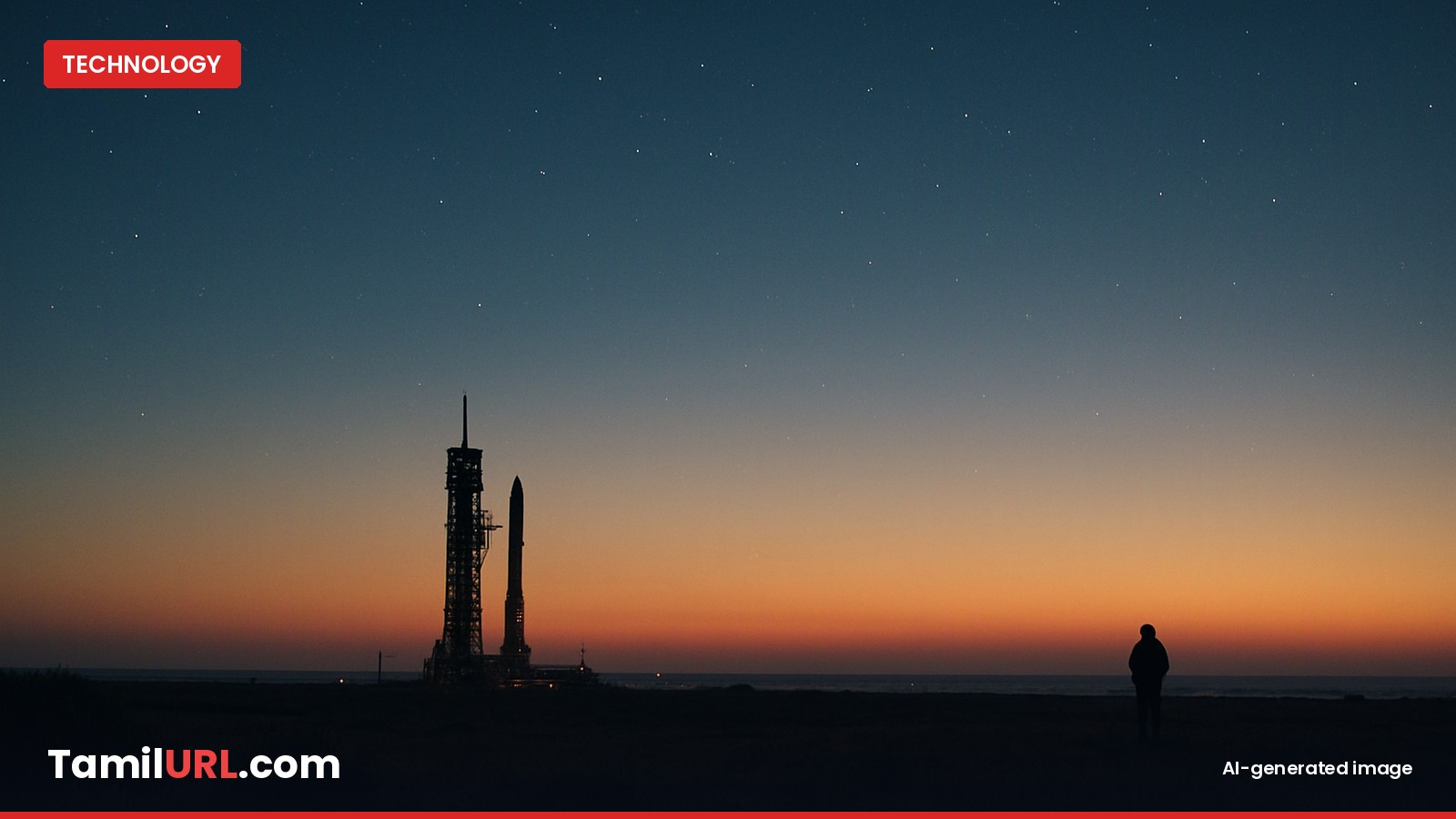
The US Federal Communications Commission (FCC) on Wednesday gave conditional approval to SpaceX to deploy and operate up to 1 million satellites. The company says they will work as data centres in space for artificial intelligence (AI) computing.
The constellation, a large network of satellites working together, is called Starmind. SpaceX has said it plans to place the satellites at altitudes of 500 to 1,002 kilometres above Earth. They would mainly use lasers to connect with other satellites, including SpaceX’s Starlink, and results would be sent back to Earth through that network.
Under the approval, SpaceX has seven years to put its first operational satellite in orbit and 14 years to deploy the full constellation, which means by 2040.
FCC Chairman Brendan Carr said in a statement that America is “leading the world into the era of super intelligence” and that the decision “opens a bold new frontier”. Elon Musk thanked Carr on X and called the project a great asset to America and the world.
Objections and open questions
Amazon, Viasat, the American Astronomical Society and an environmental nonprofit had asked the FCC to reject the plan. Amazon argued that the application lacked basic details. The astronomers’ body said the larger, brighter satellites would affect the night sky and astronomical research.
The FCC said the plan is consistent with its orbital debris rules and serves the public interest. It dismissed some concerns, including environmental ones, saying they fall outside its authority.
The approval does not mean the data centres are close. The FCC has not yet cleared SpaceX’s debris-handling plans for satellites operating above 600 kilometres. SpaceX has also sought a waiver of a rule requiring satellites that end their missions below 2,000 kilometres to re-enter the atmosphere within five years. The company is also facing challenges in cutting the cost of building and launching satellites, cooling processors in space, and financing the chips.
Astrophysicist Adam Becker said the plan is “not going to happen”. He pointed out that space is a vacuum, which traps heat, so heat can only leave by radiating away, and he said there are “basic physical limits” to that. Scientists have also warned that so many satellites could raise the risk of collisions that create space debris, and that re-entries could pollute the upper atmosphere. Astrophysicist Jonathan McDowell called the approval a mistake and said it did not properly examine whether the plan is safe.